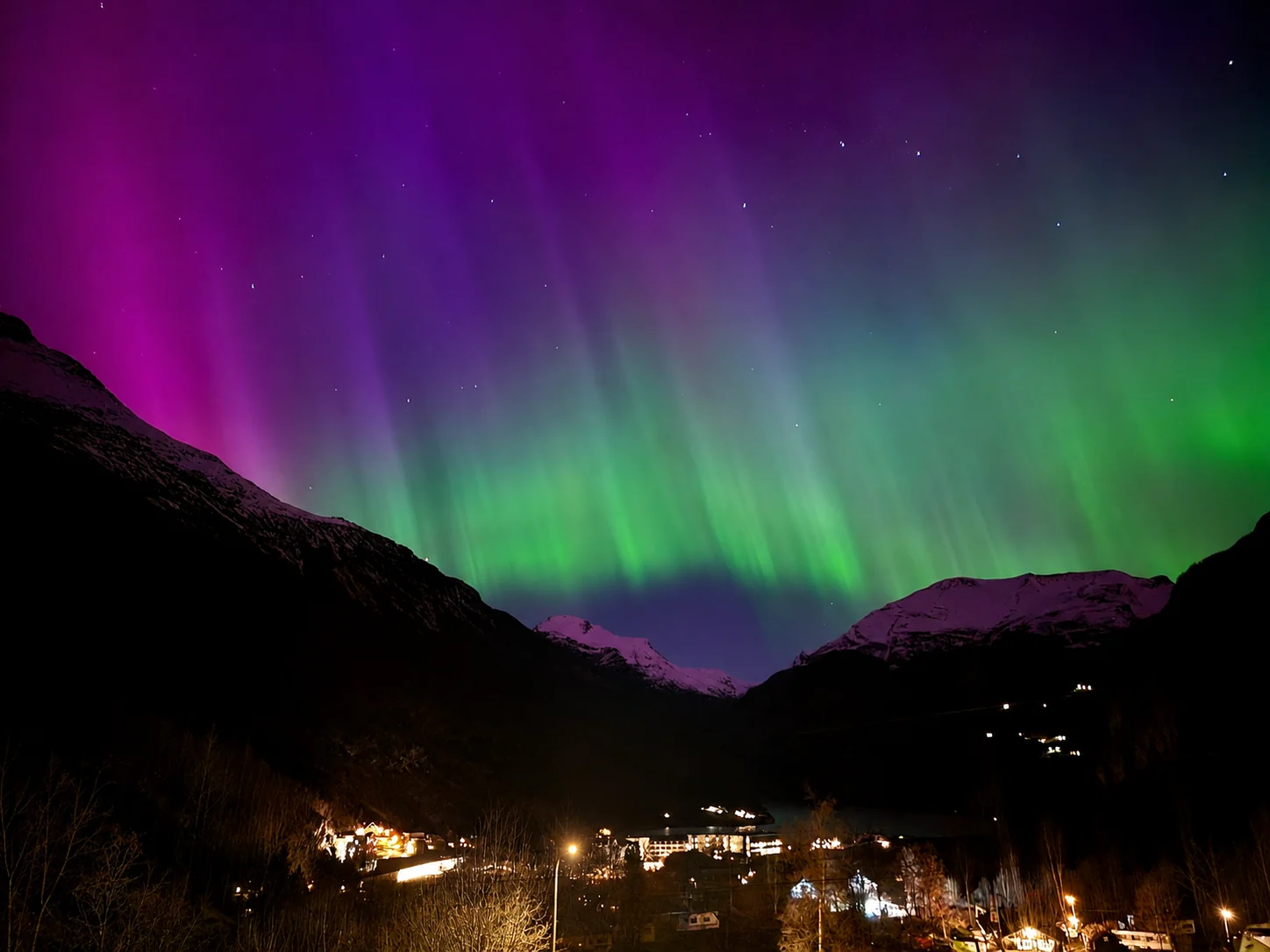
Follow the waterfall down to the centre, discover a view to remember or get close to the fjord. Here we have gathered our best tips for walks, experiences and small stops in Geiranger and the surrounding area.
We are happy to help you find a walk that suits you. Ask us at reception!
Walking times from the campsite: about 15 minutes downhill
Difficulty: EasySteps and viewing platforms beside the waterfall.
FROM THE CAMPSITE · STEPS
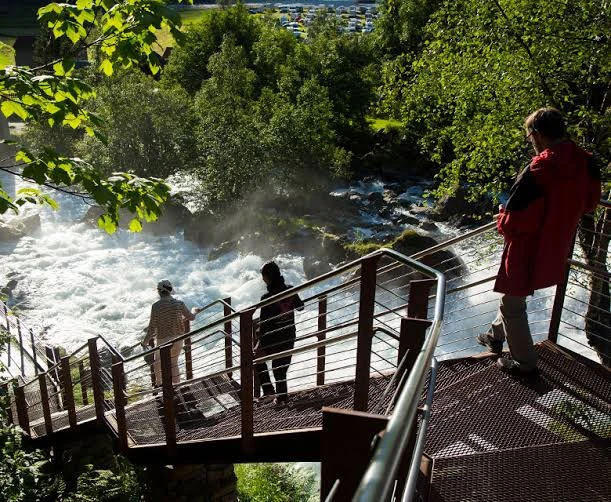
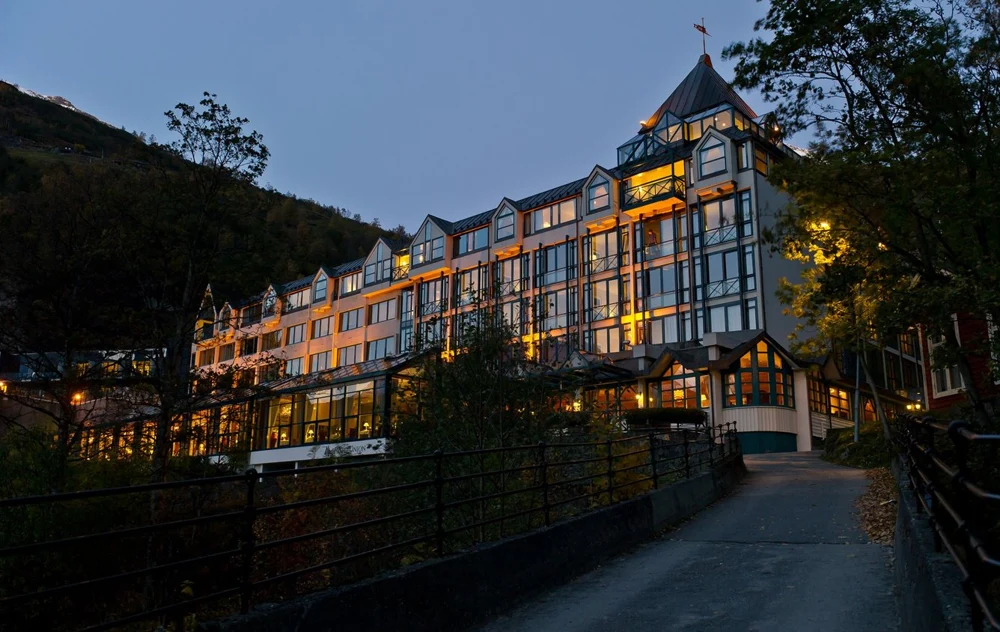
You can walk straight through the campsite and on down towards Hotel Union and Norsk Fjordsenter.
On the way you follow steps and viewing platforms beside the waterfall, all the way down to the centre.
Practical: Stairs with open steps. Not suitable for prams or strollers, and can be challenging for dogs.
You can walk straight through the campsite and on down towards Hotel Union and Norsk Fjordsenter. On the way you follow steps and viewing platforms beside the waterfall, all the way down to the centre.
The walk fits nicely before a shopping trip, a café break or dinner down in Geiranger.
Take the uphill trail from the campsite, to the left of cabin 5, towards Flydalsjuvet.
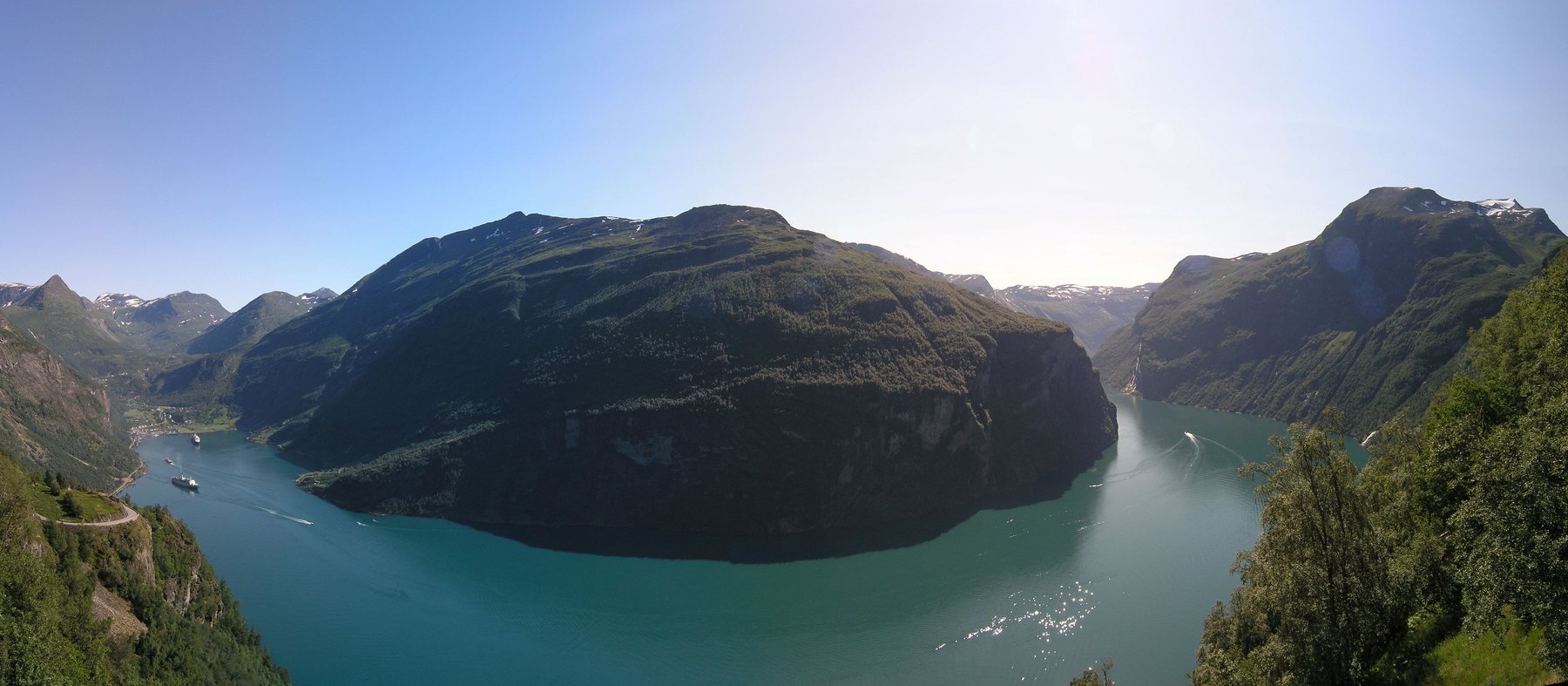
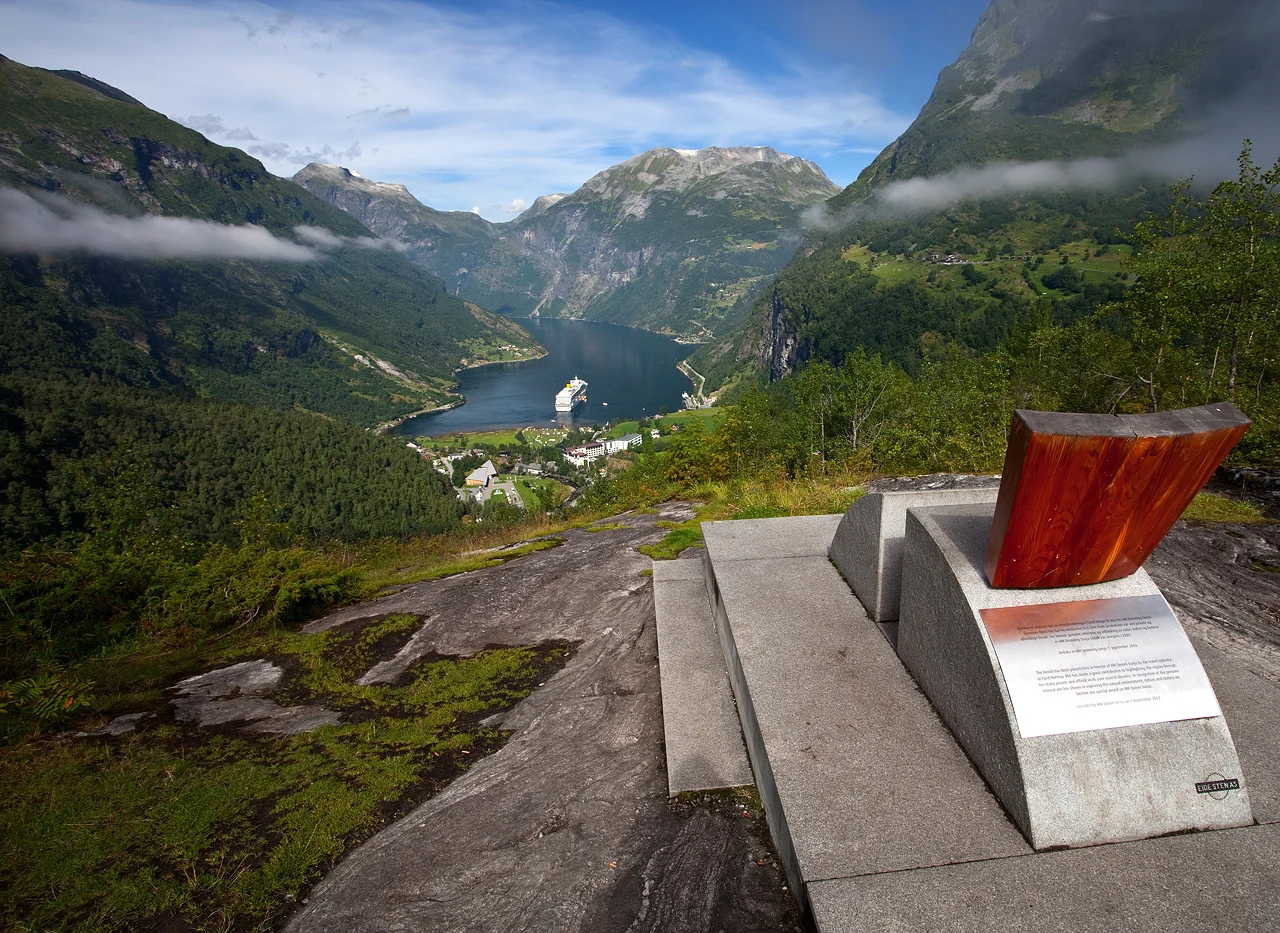
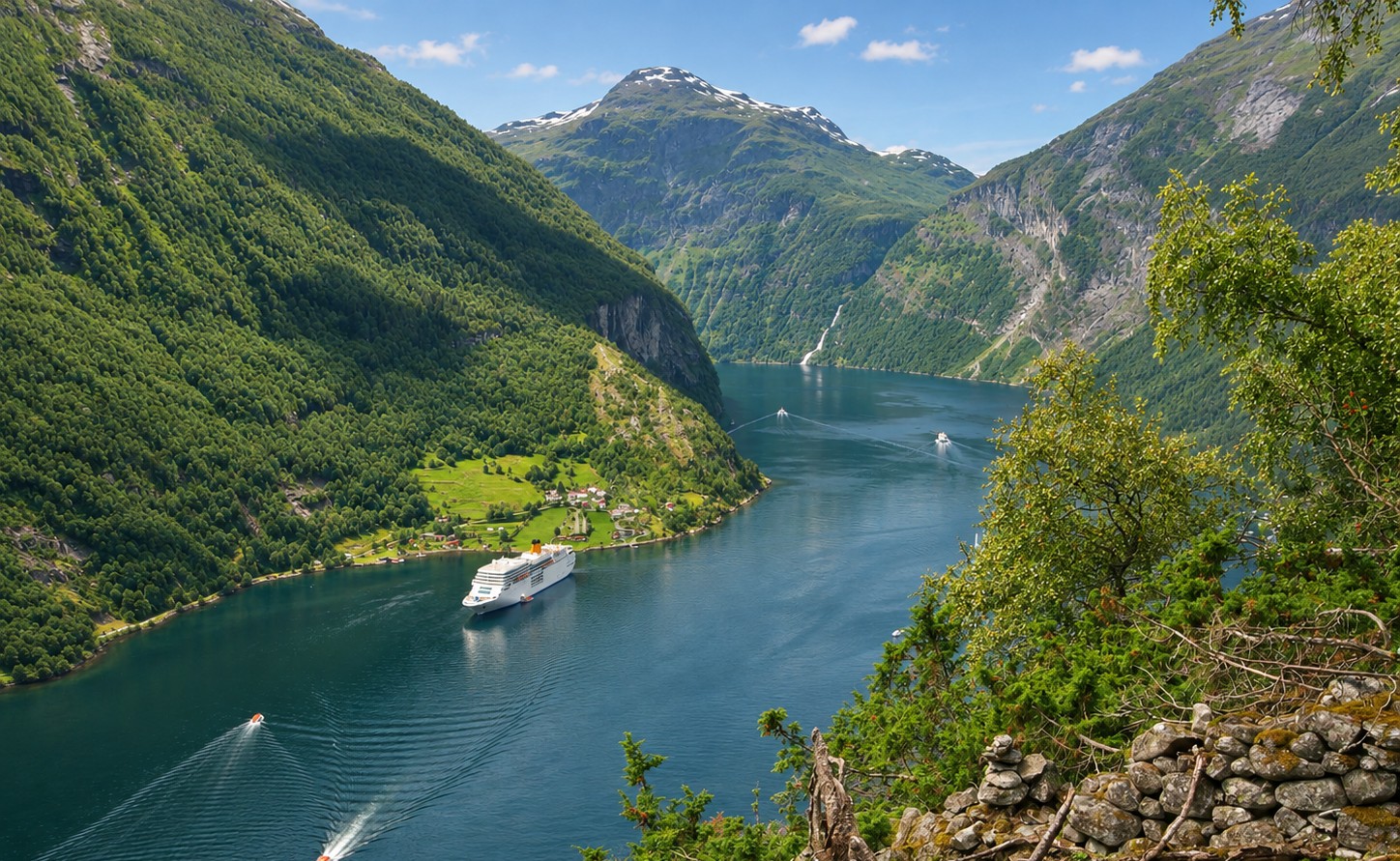
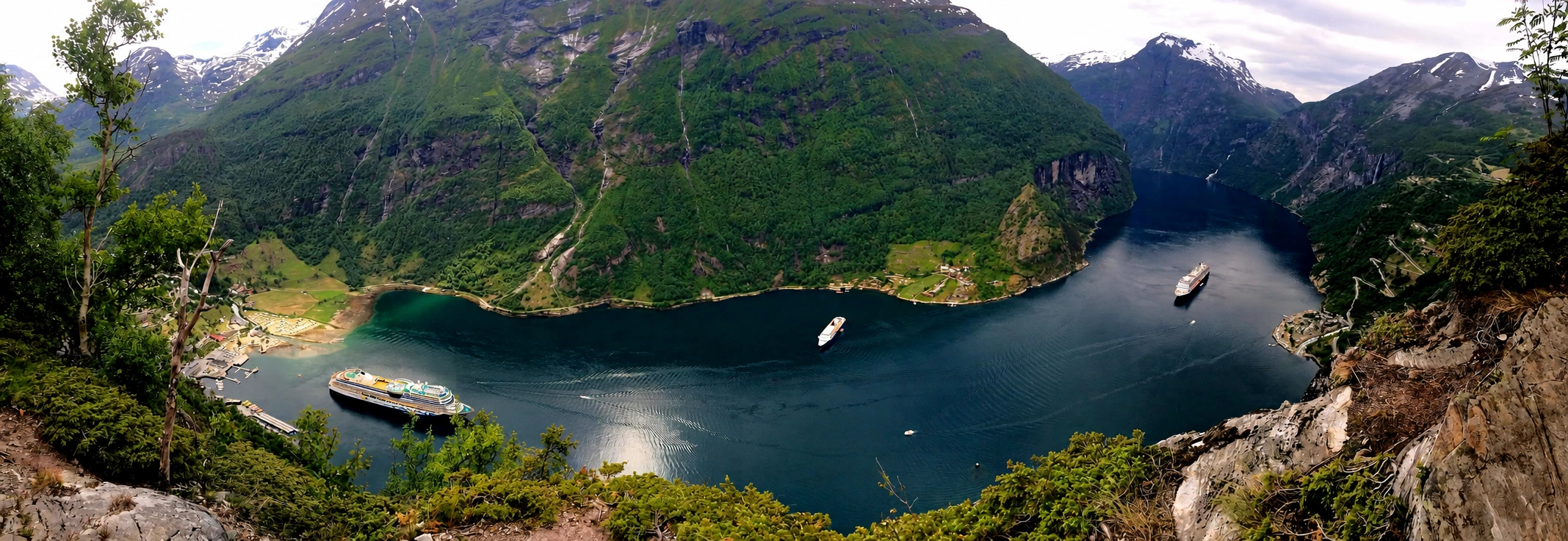
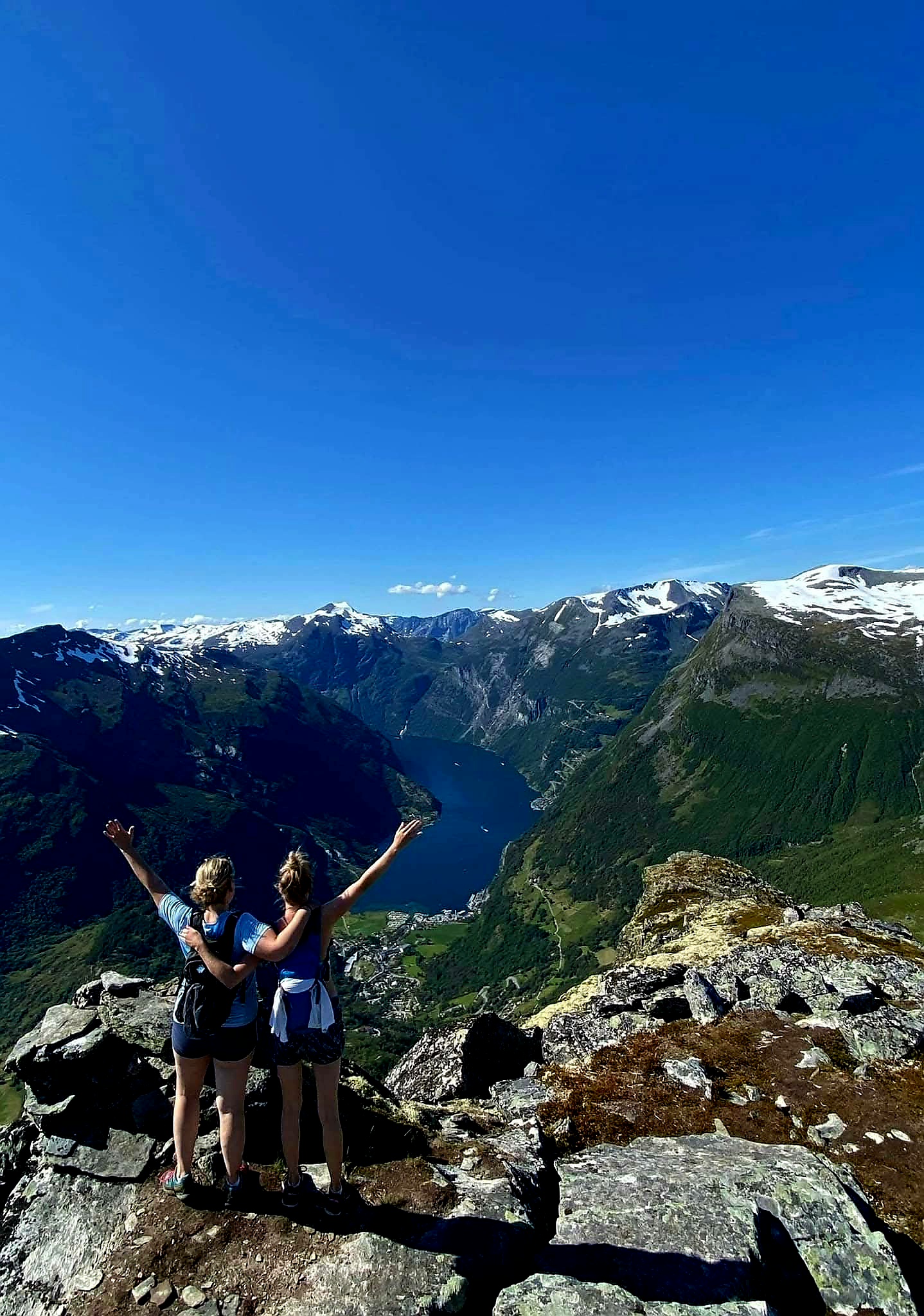
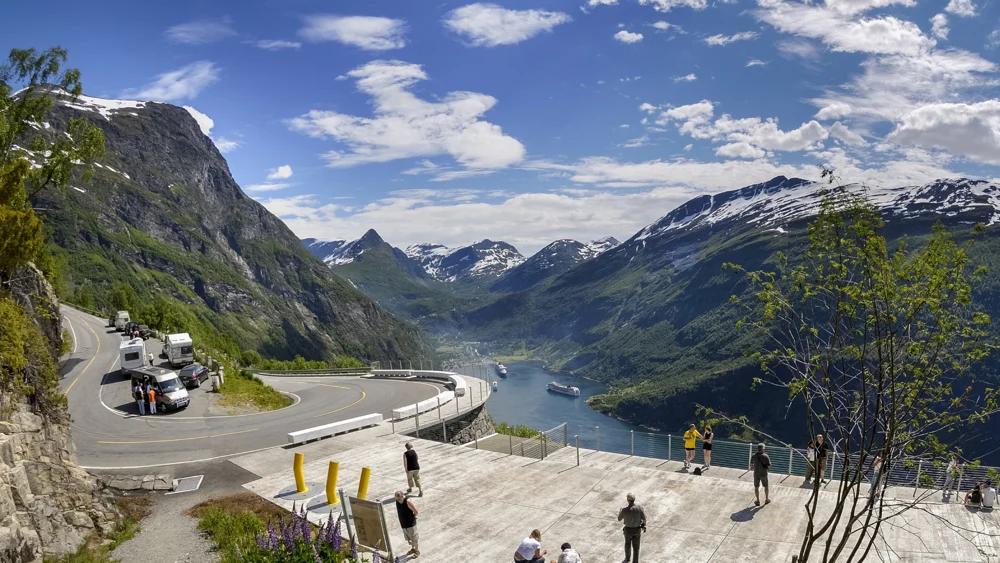
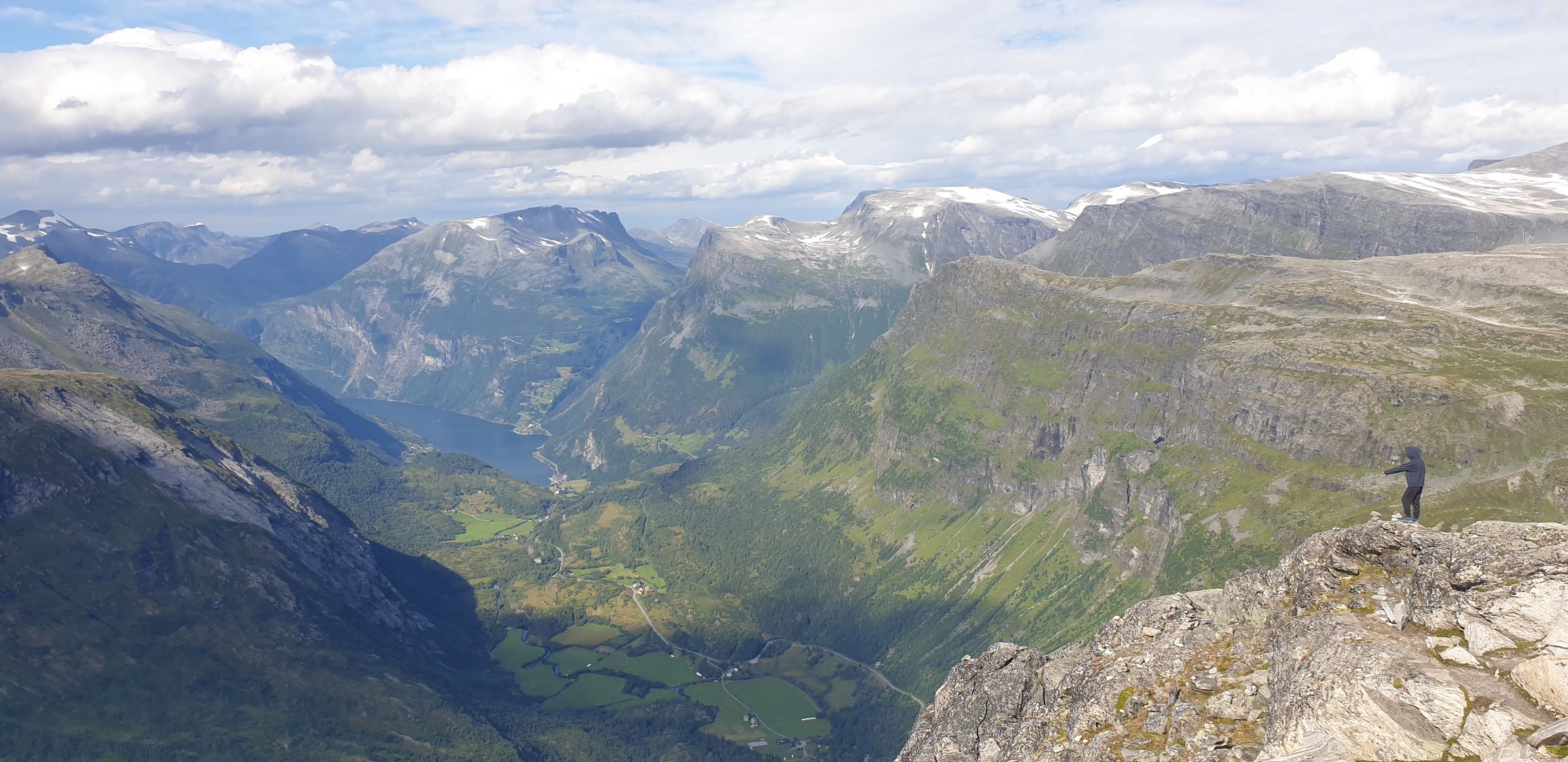
Here you stand high above Geiranger and look straight down on the fjord. There are two viewing platforms, joined by a footpath.
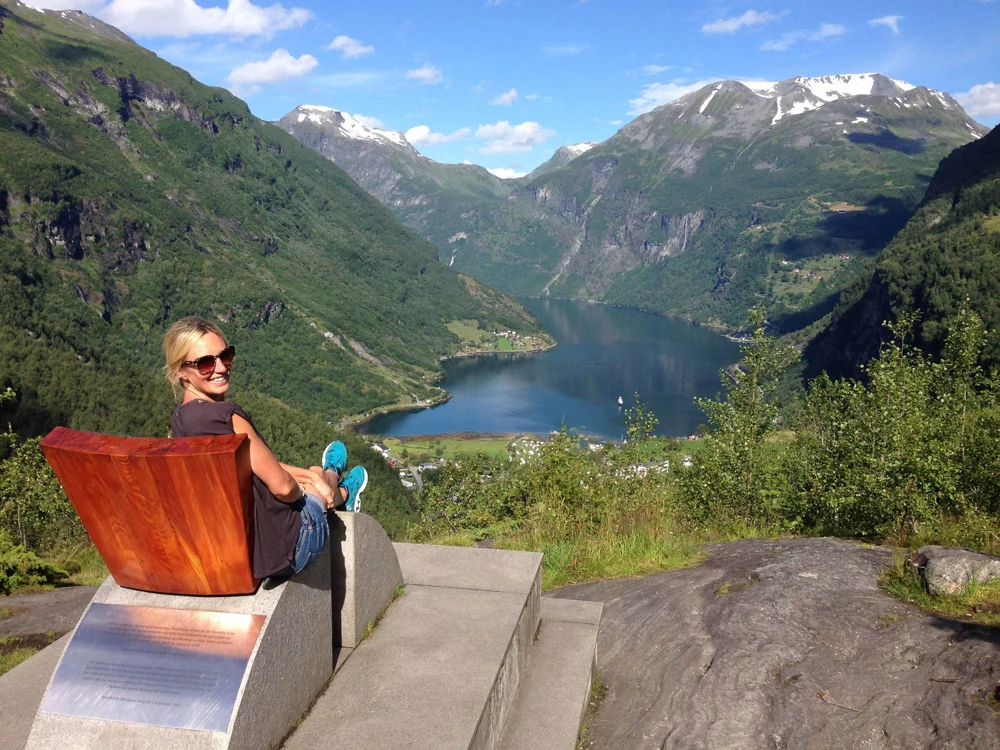
On the lower one stands the artwork Fjordsetet, better known as the Queen’s Chair, unveiled by Queen Sonja in September 2003.
Practical: A side road leads in to parking at both platforms. There are toilets on site, open from mid-May to mid-October.
Take the uphill trail from the campsite, to the left of cabin 5, towards Flydalsjuvet.
Here you stand high above Geiranger and look straight down on the fjord. There are two viewing platforms, joined by a footpath. On the lower one stands the artwork Fjordsetet, better known as the Queen’s Chair, unveiled by Queen Sonja in September 2003.
Practical information: A side road leads in to parking at both platforms. There are toilets on site, open from mid-May to mid-October.
Photo: Cathrin Olsen
Westerås
Walking time from the campsite: about 45 minutes
Difficulty: ModerateWalk to the farm and several trails.
Walk downhill from the campsite towards Hotel Union. Turn right just before the car park and follow the trail up to Westerås.
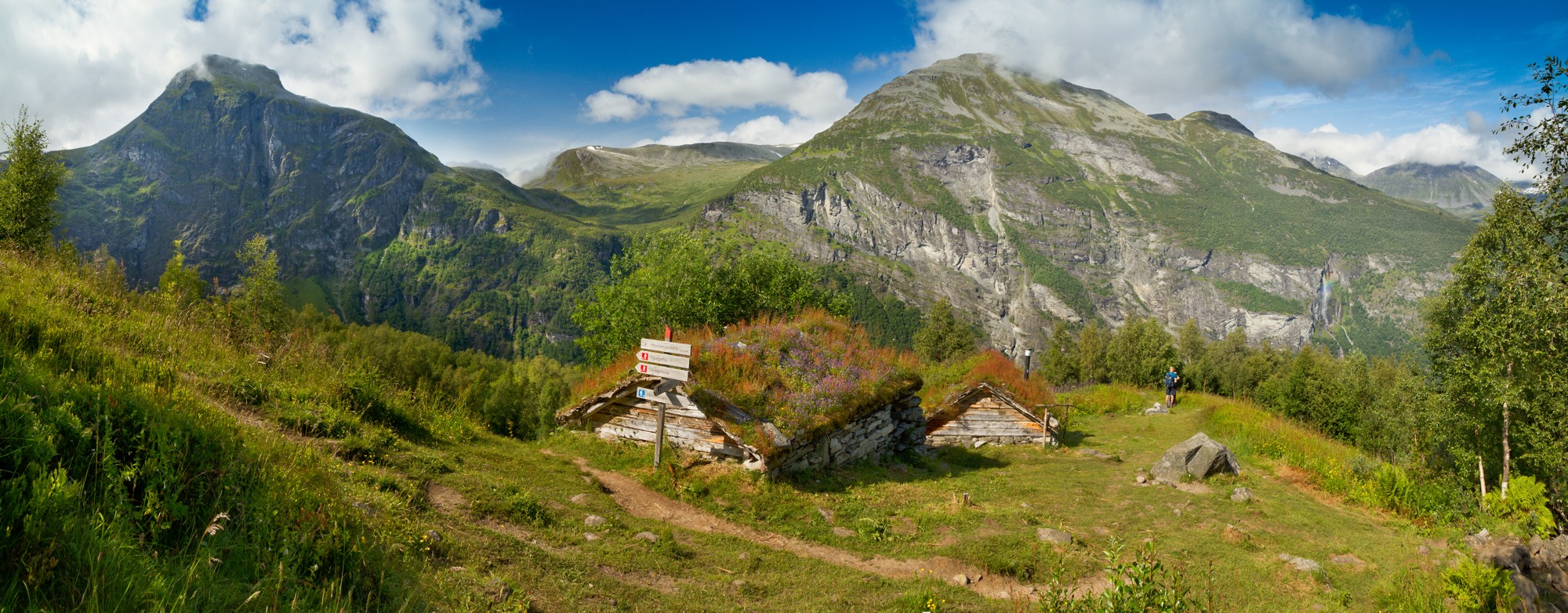
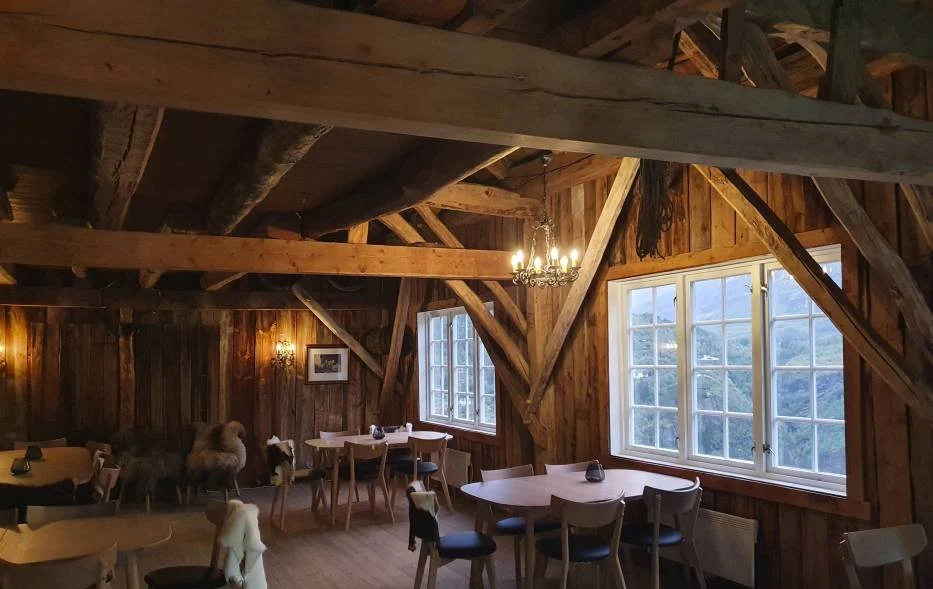
At the farm, take a break in the restaurant in the old barn, with views down to Geiranger and the fjord. From here you can continue to Storsæterfossen, Vesteråsfjellet or Løsta.
Practical: The restaurant is open May to September. There are few parking spaces, and parking is paid. Motorhomes and caravans cannot drive up. Feel free to walk from the campsite.
Walk downhill from the campsite towards Hotel Union. Turn right just before the car park and follow the trail up to Westerås. The trail has been improved with stone steps built by Nepalese Sherpas.
At the farm, take a break in the restaurant in the old barn (open May to September), with views down to Geiranger and the fjord. From here you can continue to Storsæterfossen, Vesteråsfjellet or Løsta.
Photo: Kristine E.M.S Vinje
Storsæterfossen
Walking time from Westerås: about 45 minutes
Difficulty: ModerateWalk behind the waterfall.
FROM THE CAMPSITE · STEEP SECTIONS
From Westerås, follow the trail on up to Storsæterfossen.
The walk has steep sections and stone steps. It gives you one of the most special waterfall experiences in Geiranger.
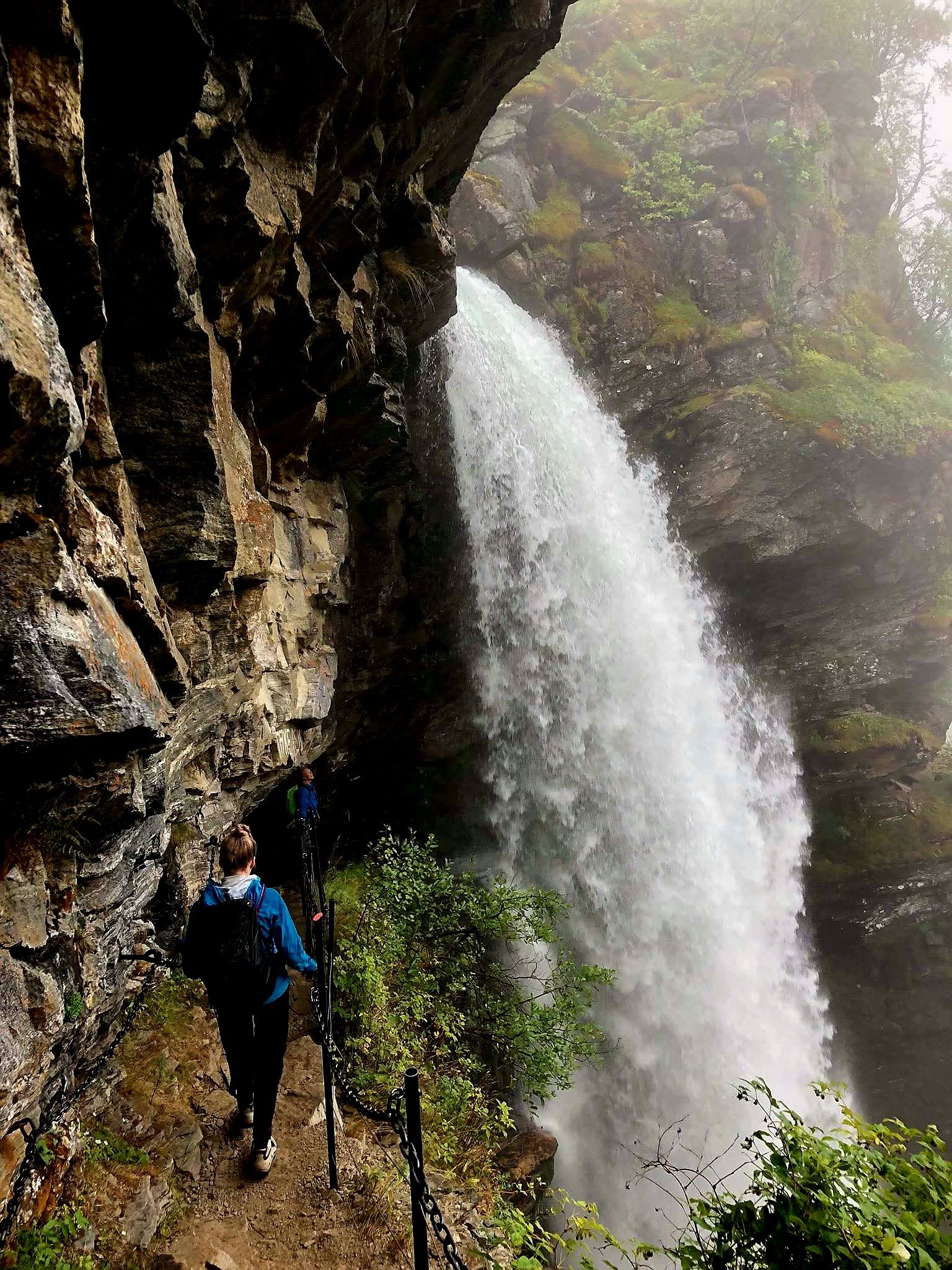
The trail takes you right in behind the waterfall. Here you feel the cool spray, hear the water roar close by and see the fall from a completely different angle.
Practical: It can be wet and slippery by the waterfall, so wear sturdy shoes. The water flow is greatest during the snowmelt in spring and early summer.
From Westerås, follow the trail on up to Storsæterfossen. The walk has steep sections and stone steps. It gives you one of the most special waterfall experiences in Geiranger.
The trail takes you right in behind the waterfall. Here you feel the cool spray, hear the water roar close by and see the fall from a completely different angle.
It can be wet and slippery by the waterfall, so wear sturdy shoes. The water flow is greatest during the snowmelt in spring and early summer.
From Westerås, follow the trail out to Vesteråsfjellet.
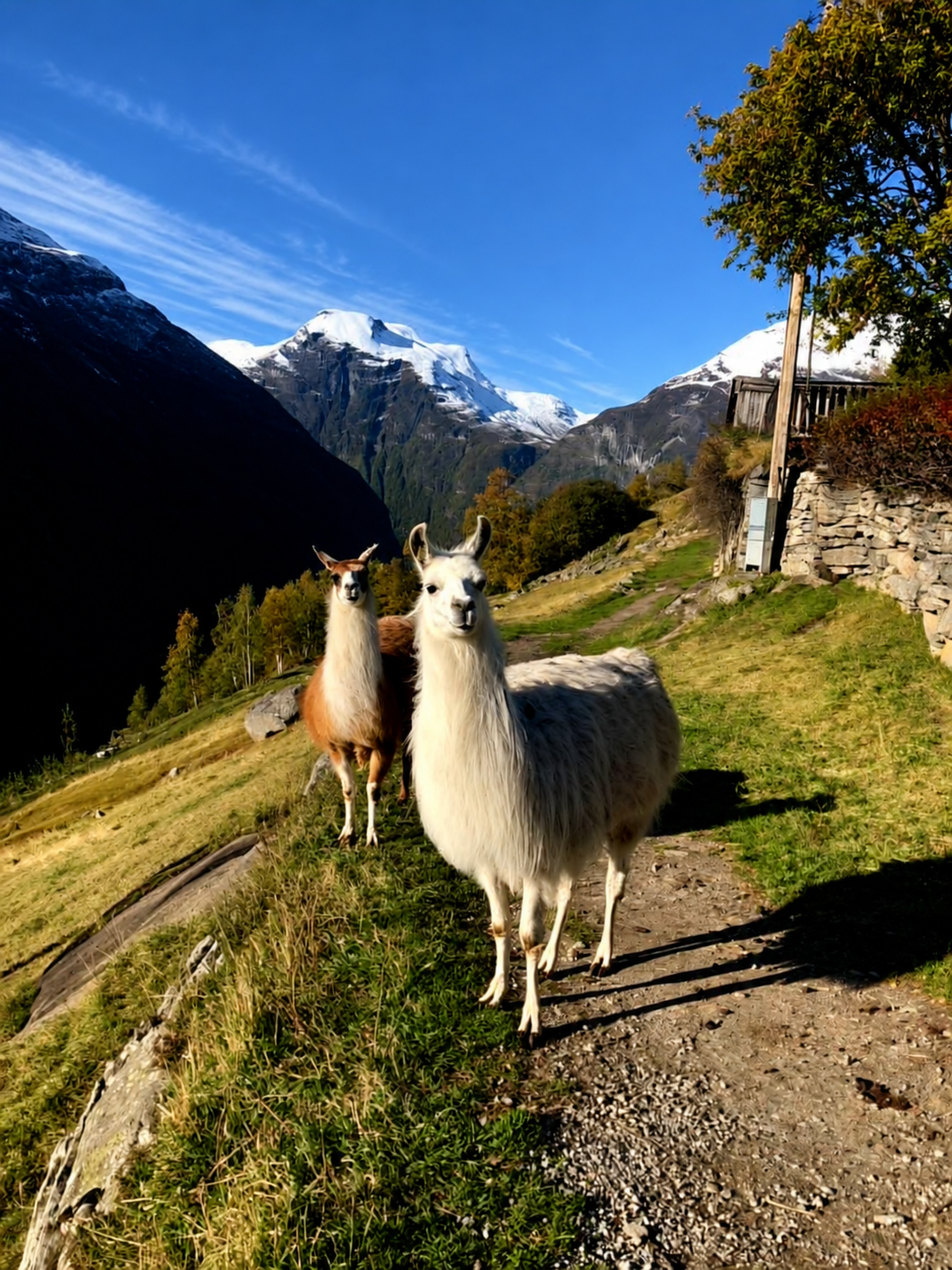
This is an easy walk on an almost level path. Grazing llamas and goats make it popular with children.
From the viewpoint, look out over the fjord and down to Geiranger centre.
Practical: The viewpoint is beside a steep mountainside. Keep children by the hand and well back from the edge.
From Westerås, follow the trail out to Vesteråsfjellet.
This is an easy walk on an almost level path. Grazing llamas and goats make it popular with children. From the viewpoint, look out over the fjord and down to Geiranger centre.
Photo: Inga Vinje
Løsta
Walking time from Westerås: about 2 hours
Difficulty: ModerateFurther up, with open views.
HIKE · MORE DEMANDING
For a longer walk, continue from Vesteråsfjellet towards Løsta.
The first few minutes follow a flat tractor road, before the path climbs steadily.
The route has exposed sections, and from the top you look out over the Geirangerfjord and the surrounding mountains.
Practical: Allow about 2 hours from Westerås. The path can be wet and slippery after rain, and snow and meltwater can make the hike difficult early in the season.
For a longer walk, continue from Vesteråsfjellet towards Løsta.
The first few minutes follow a flat tractor road, before the path climbs steadily. The route has exposed sections, and from the top you look out over the Geirangerfjord and the surrounding mountains.
Difficulty: DemandingFjord farm high above the water, overlooking the Seven Sisters waterfalls.
HIKE · STEEP AND EXPOSED
Take a boat to Skagehola and follow the steep trail up to Skageflå, or walk via Homlong and Homlongsætra.
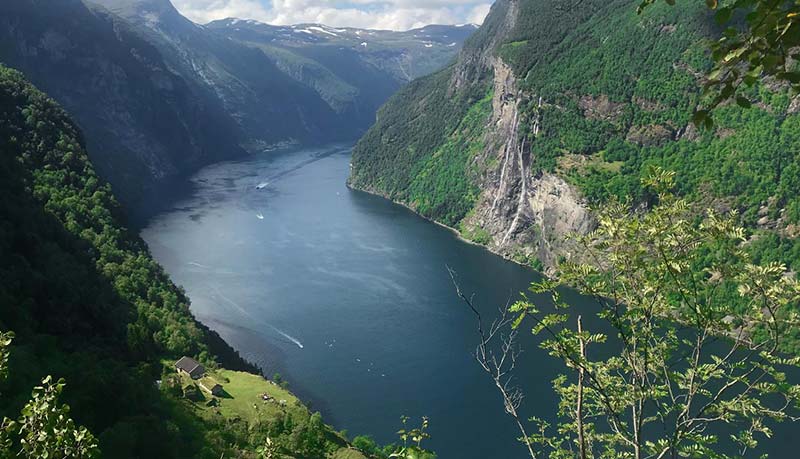
The old fjord farm overlooks the Seven Sisters and Knivsflå farm across the fjord.
The story goes that the children on the farm were tied with ropes so they would not fall over the edge.
Practical: The walk has steep and exposed sections. Book any boat transport and return in advance.
Take a boat to Skagehola and follow the steep trail up to Skageflå, or walk via Homlong and Homlongsætra.
The old fjord farm overlooks the Seven Sisters and Knivsflå farm across the fjord. The story goes that the children on the farm were tied with ropes so they would not fall over the edge.
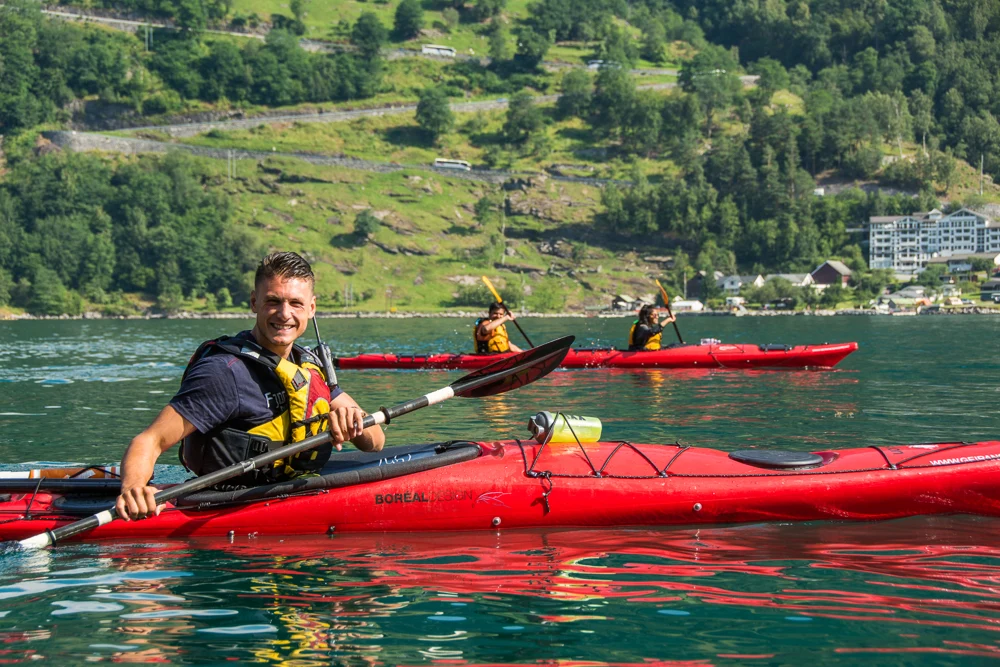
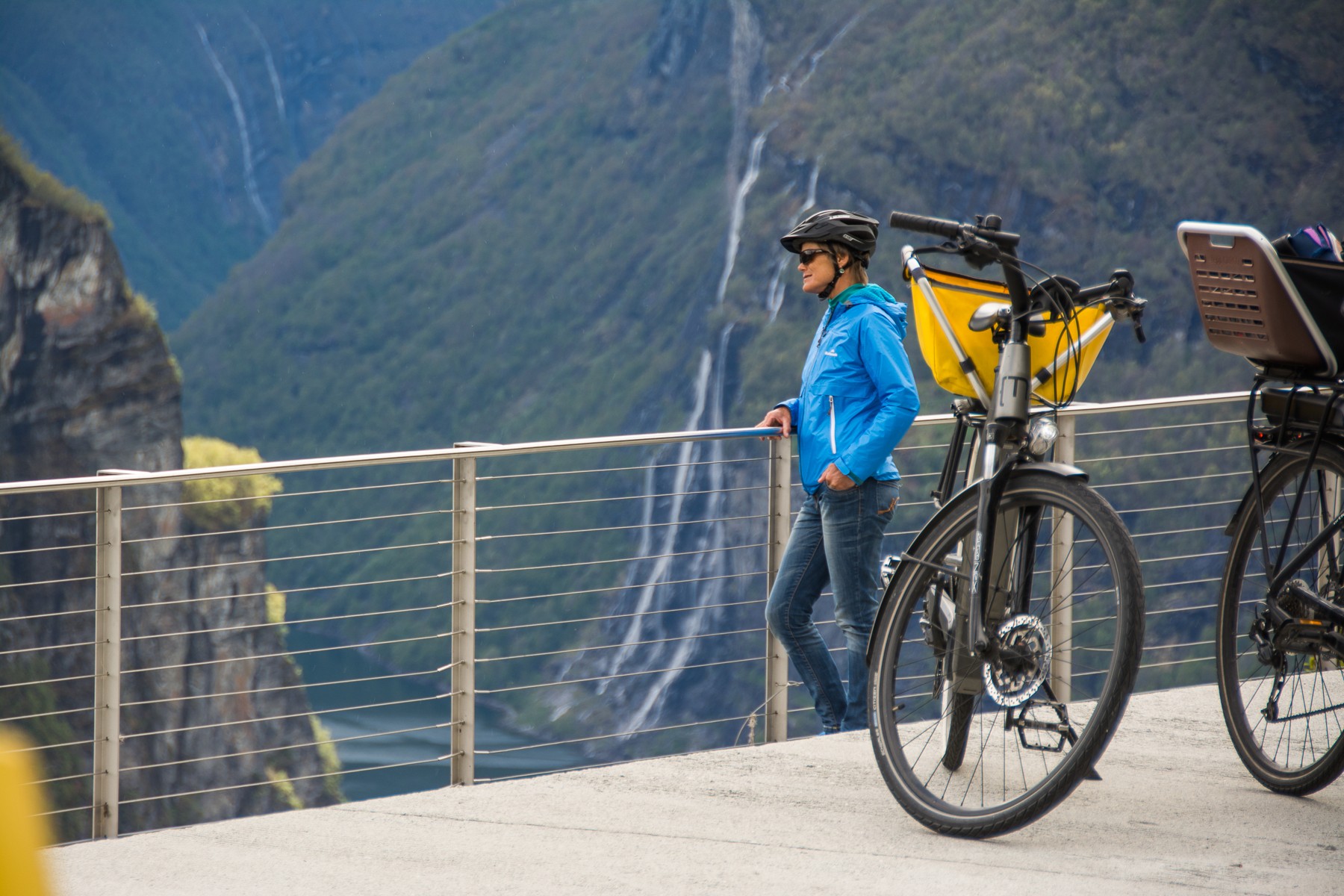
From fjord trips and kayaking to cycling, spa and old farmsteads. Here you will find the experiences nearby.
Photo: Explore Geiranger
Zipline and via ferrata
100 metres from the campsite
Adventure with speed and heights.
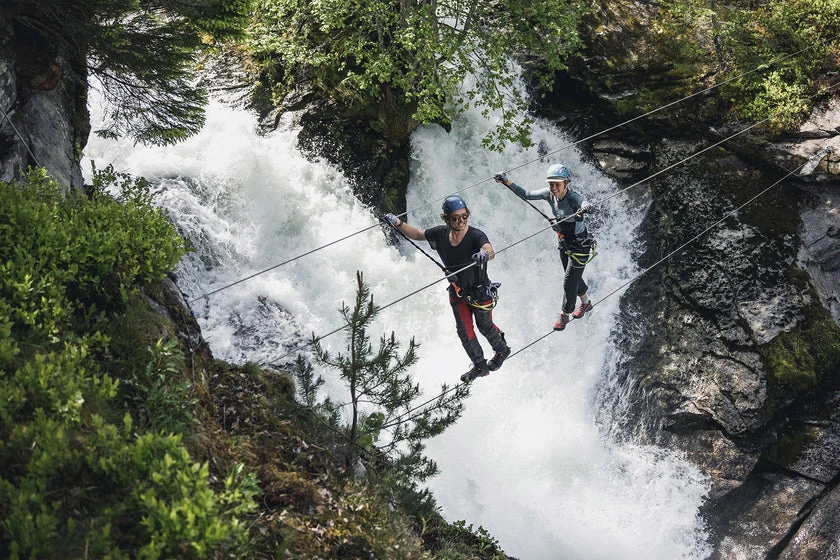
Explore Geiranger is close to the campsite. The via ferrata follows the river towards Dynamite Waterfall, with climbing along the rock face and crossings on Nepal bridges.
Ziplines carry you through the treetops and over the gorge, with rushing water below.
Practical: Check age, height, equipment and participation requirements with the operator before booking.
Explore Geiranger is close to the campsite. The via ferrata follows the river towards Dynamite Waterfall, with climbing along the rock face and crossings on Nepal bridges.
Ziplines carry you through the treetops and over the gorge, with rushing water below.
Check age, height, equipment and participation requirements with the operator before booking.
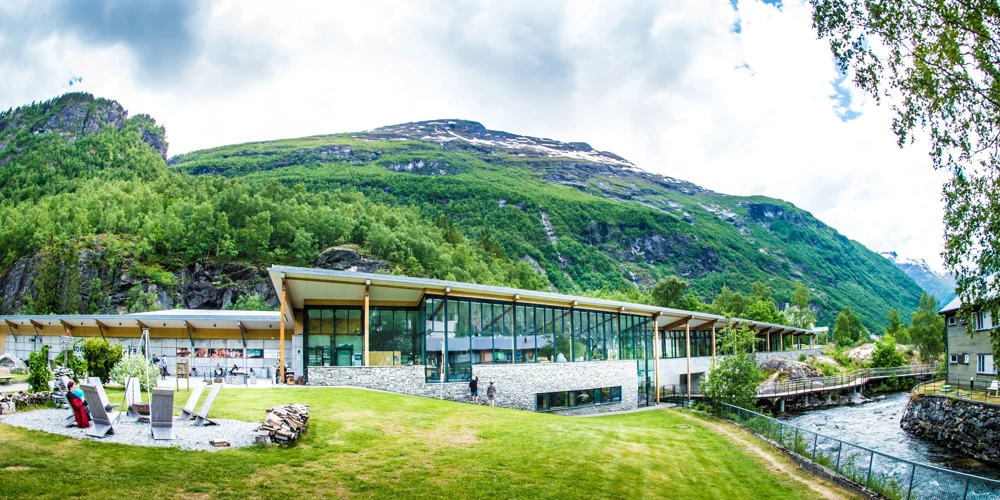
Learn about the fjord landscape and the people who have lived here.
The centre has exhibitions, an art section and activities for children, including a dedicated activity room.
Practical: The Norwegian Fjord Centre is open year-round. Check current opening hours before visiting. In winter, you can also rent winter equipment at the Norwegian Fjord Centre.
Learn about the fjord landscape and the people who have lived here. The centre has exhibitions, an art section and activities for children, including a dedicated activity room.
A lovely indoor stop on a rainy day or on your walk to the village. Take a break in the small café.
The Norwegian Fjord Centre is open year-round. Check current opening hours before visiting.
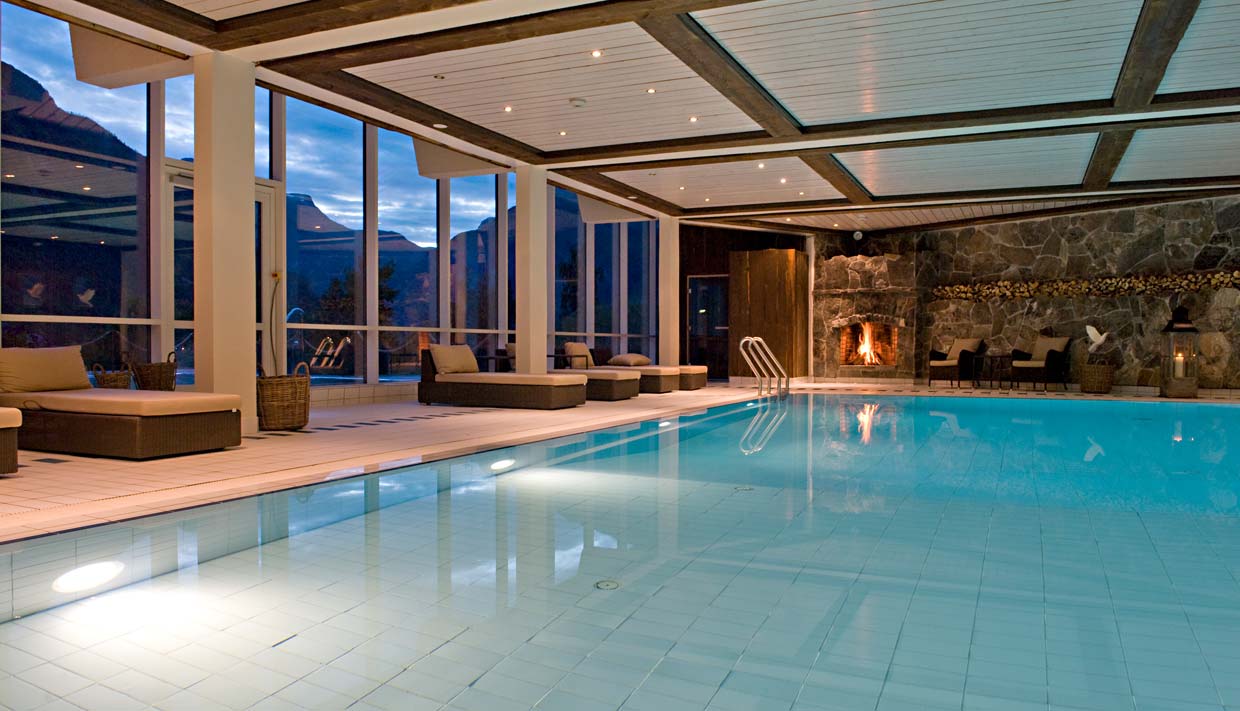
Baths: Indoor pool with a fireplace, a separate children’s pool, a sauna and a heated outdoor pool with a hot tub. Day guests are welcome.
Spa: Book massages, facials and body treatments, including a hamam (Turkish bath). We recommend booking treatments in advance.
Practical: Please contact the hotel before you arrive. The baths and spa are sometimes closed to drop-in guests. Prices, opening hours and age limits are on the hotel’s website.
Enjoy a relaxing visit to the baths and spa at Hotel Union. Check day-guest access, age limits and advance booking with the hotel.
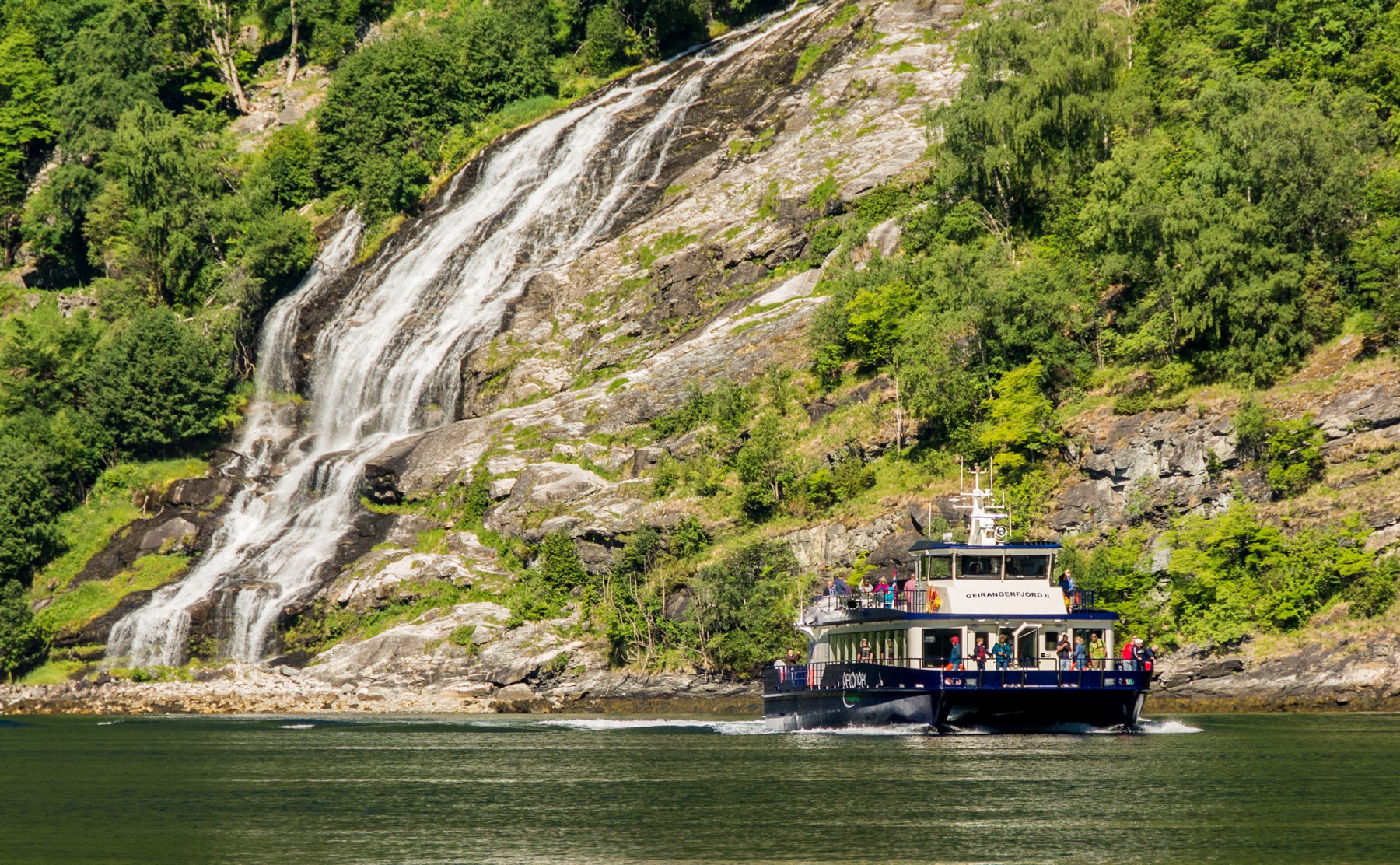
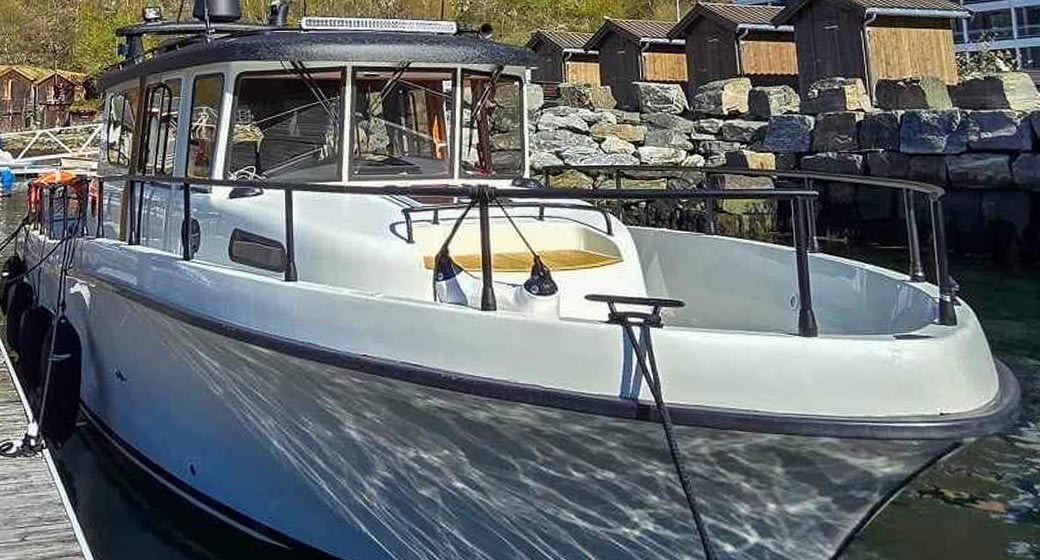
Waterfalls and mountain farms seen from the water.
Sightseeing boat: A relaxed 75-minute tour past the Seven Sisters, Suitor, Bringefossen and Bridal Veil, and the farms Skageflå and Knivsflå. The boats have indoor lounges in bad weather.
RIB: The same waterfalls, but faster and closer to the falls and mountainsides. You are given a suit, but you may still get a little wet.
Practical: Selected departures offer a booked drop-off and pick-up at Skagehola for the Skageflå hike. Check departures and reservations with the operator.
Sightseeing boat: A relaxed 75-minute tour past the Seven Sisters, Suitor, Bringefossen and Bridal Veil, and the farms Skageflå and Knivsflå. The boats have indoor lounges in bad weather. An extended two-hour cruise by quiet electric catamaran is another option.
RIB: The same waterfalls, but faster and closer to the falls and mountainsides. You are given a suit, but you may still get a little wet.
Selected departures offer a booked drop-off and pick-up at Skagehola for the Skageflå hike. Check departures and reservations with the operator. Dogs are welcome on a lead, but must stay out on deck.
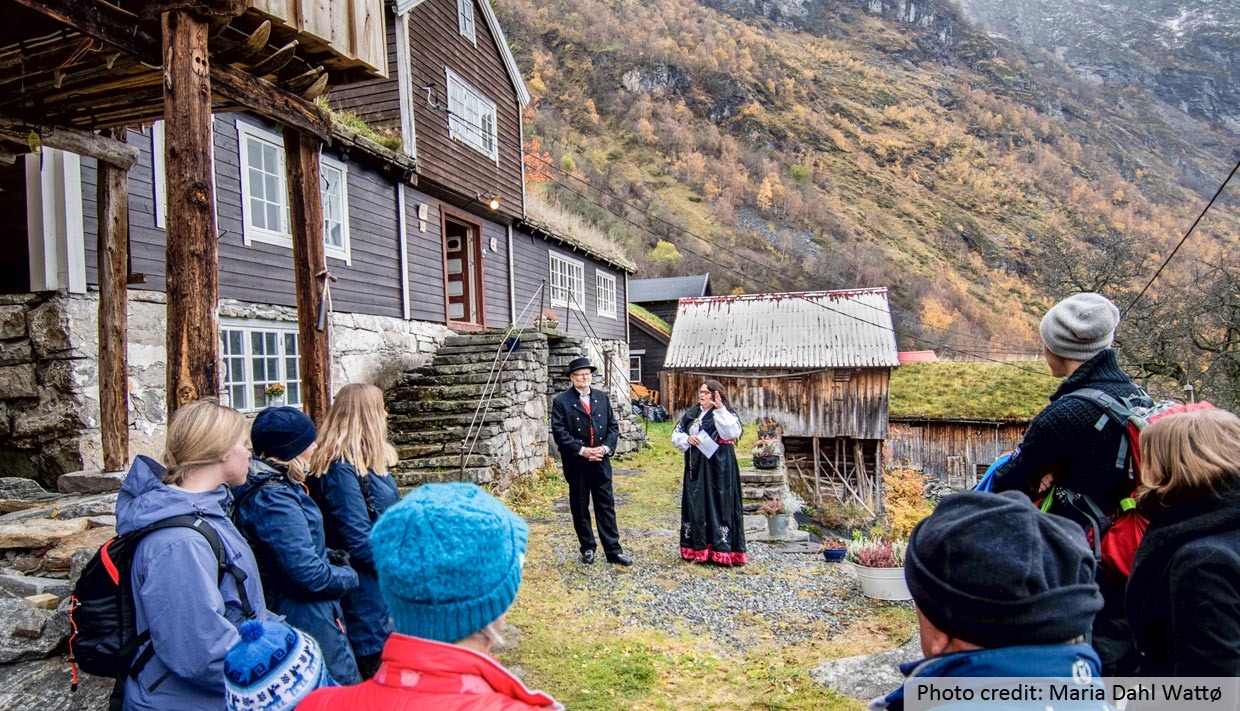
Møllstunet lies along Ørnevegen, just before Ørnesvingen. It is Sunnmøre’s best-preserved clustered farmyard, with eleven protected buildings dating from the 1700s to 1905.
Anette and Willy live here all year. They welcome visitors into their home to show the traditional building style and share stories of farm life.
The visit includes local flavours and seasonal experiences.
Practical: Book the farm visit in advance and arrange transport with the operator.
Møllstunet lies along Ørnevegen, just before Ørnesvingen. It is Sunnmøre’s best-preserved clustered farmyard, with eleven protected buildings dating from the 1700s to 1905.
Anette and Willy live here all year. They welcome visitors into their home to show the traditional building style and share stories of farm life.
The visit includes local flavours and seasonal experiences.
Book the farm visit in advance and arrange transport with the operator.
From the campsite, follow road 63 uphill towards Langvatn to Flydalsjuvet.
Here you stand high above Geiranger and look straight down on the fjord. There are two viewing platforms, joined by a footpath.
On the lower one stands the artwork Fjordsetet, better known as the Queen’s Chair, unveiled by Queen Sonja in September 2003.
Practical: A side road leads in to parking at both platforms. There are toilets on site, open from mid-May to mid-October.
From the campsite, follow road 63 uphill towards Langvatn to Flydalsjuvet.
Here you stand high above Geiranger and look straight down on the fjord. There are two viewing platforms, joined by a footpath.
On the lower one stands the artwork Fjordsetet, better known as the Queen’s Chair, unveiled by Queen Sonja in September 2003.
Practical information: A side road leads in to parking at both platforms. There are toilets on site, open from mid-May to mid-October. In summer, sightseeing buses run from Geiranger centre.
Want to leave the car behind? In summer, sightseeing buses run from Geiranger centre to the viewpoints. Choose between tours to Ørnesvingen, Flydalsjuvet and Dalsnibba.
When the road between Geiranger and Langvatn is open, drive via Langvatn and road 15 to Lom.
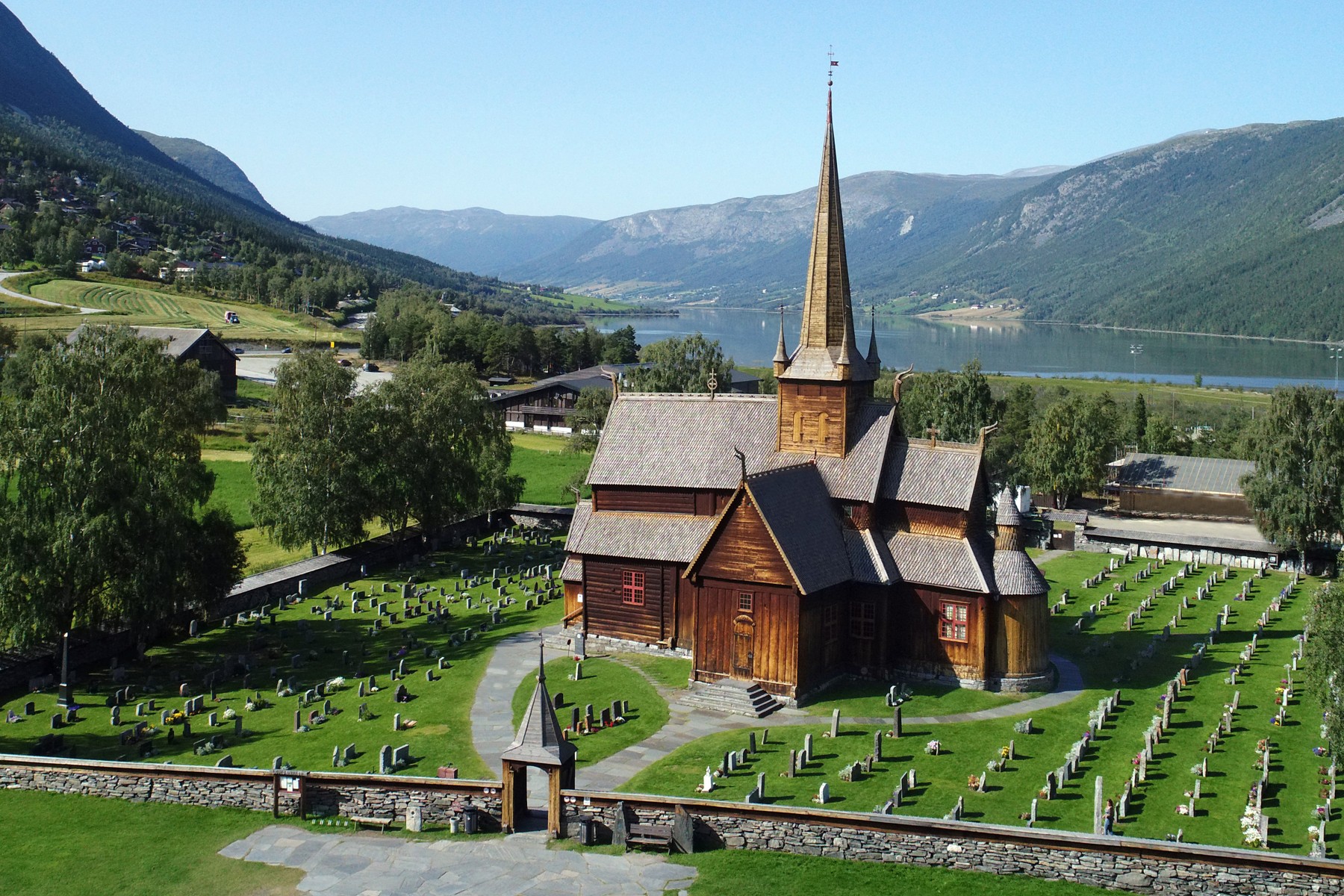
In this mountain village stands Lom’s twelfth-century stave church, with dark tarred timber, dragon heads and carved portals. It remains in use.
Practical: Check road status and opening hours before visiting.The Geiranger–Langvatn road closes in winter.
When the road between Geiranger and Langvatn is open, drive via Langvatn and road 15 to Lom.
In this mountain village stands Lom’s twelfth-century stave church, with dark tarred timber, dragon heads and carved portals. It remains in use. Enjoy handmade baking at the popular Bakeriet i Lom, and local food and artisan products from small producers at Smak i Lom.
Practical information: The Geiranger–Langvatn road closes in winter. Check road status and opening hours before visiting.
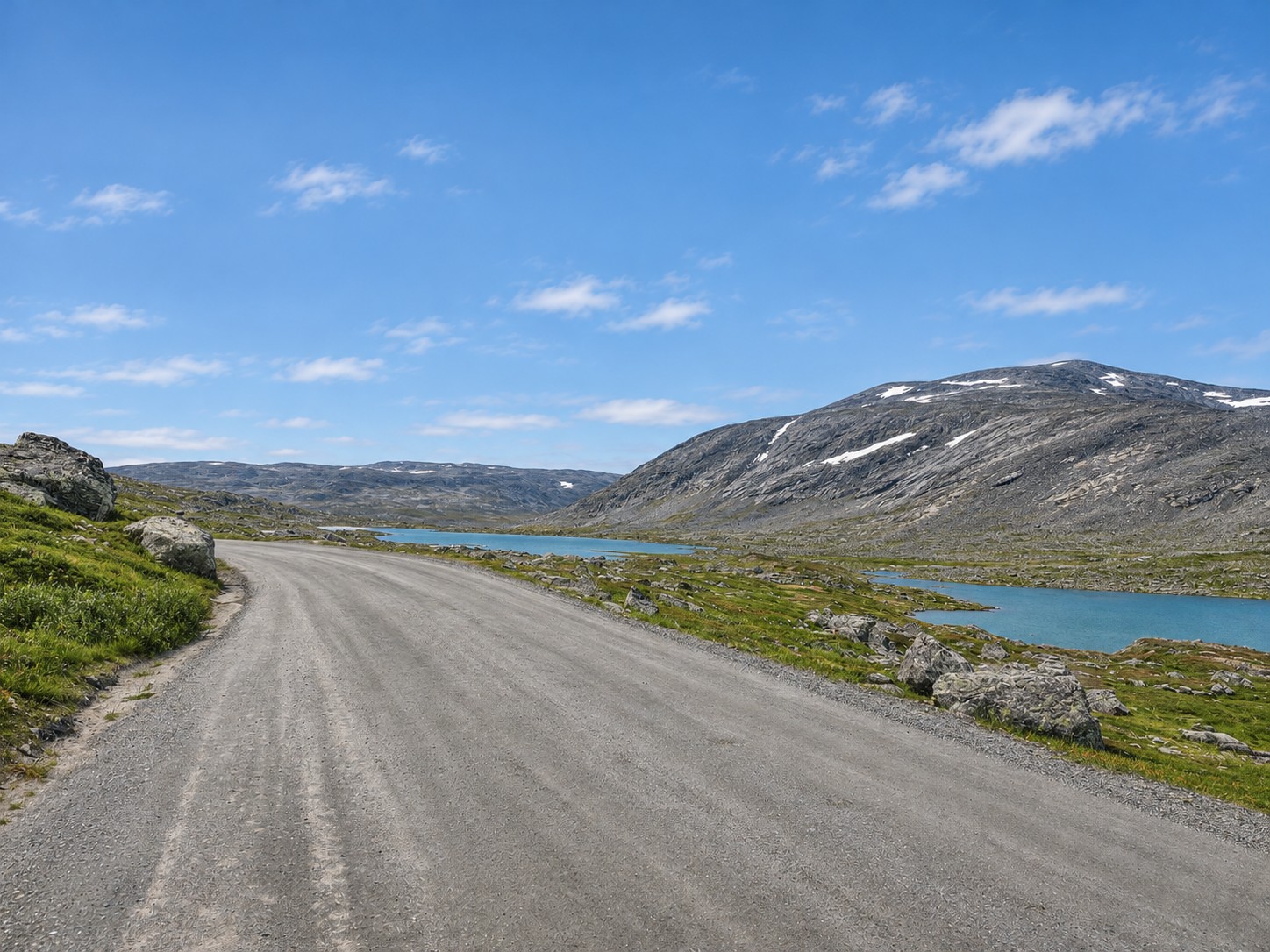
Drive over the mountains to Langvatn and towards Grotli, then follow Gamle Strynefjellsvegen towards Videsæter.
Built between 1889 and 1894 to connect communities east and west of the mountains, the road retains hand-built stone walls and old roadside stones.
Practical: The road is narrow and partly gravel. Check opening and vehicle restrictions before travelling.The road closes in winter.
Drive over the mountains to Langvatn and towards Grotli, then follow Gamle Strynefjellsvegen towards Videsæter.
Built between 1889 and 1894 to connect communities east and west of the mountains, the road retains hand-built stone walls and old roadside stones. High in the mountains the landscape opens up with wide plains and green lakes – the drive is the experience itself.
The road is narrow and partly gravel. Check opening and vehicle restrictions before travelling.
The road closes in winter. Check road conditions before your trip.
Drive from Geiranger via Eidsdal to Norddal, then take the toll road up to Herdalssætra.
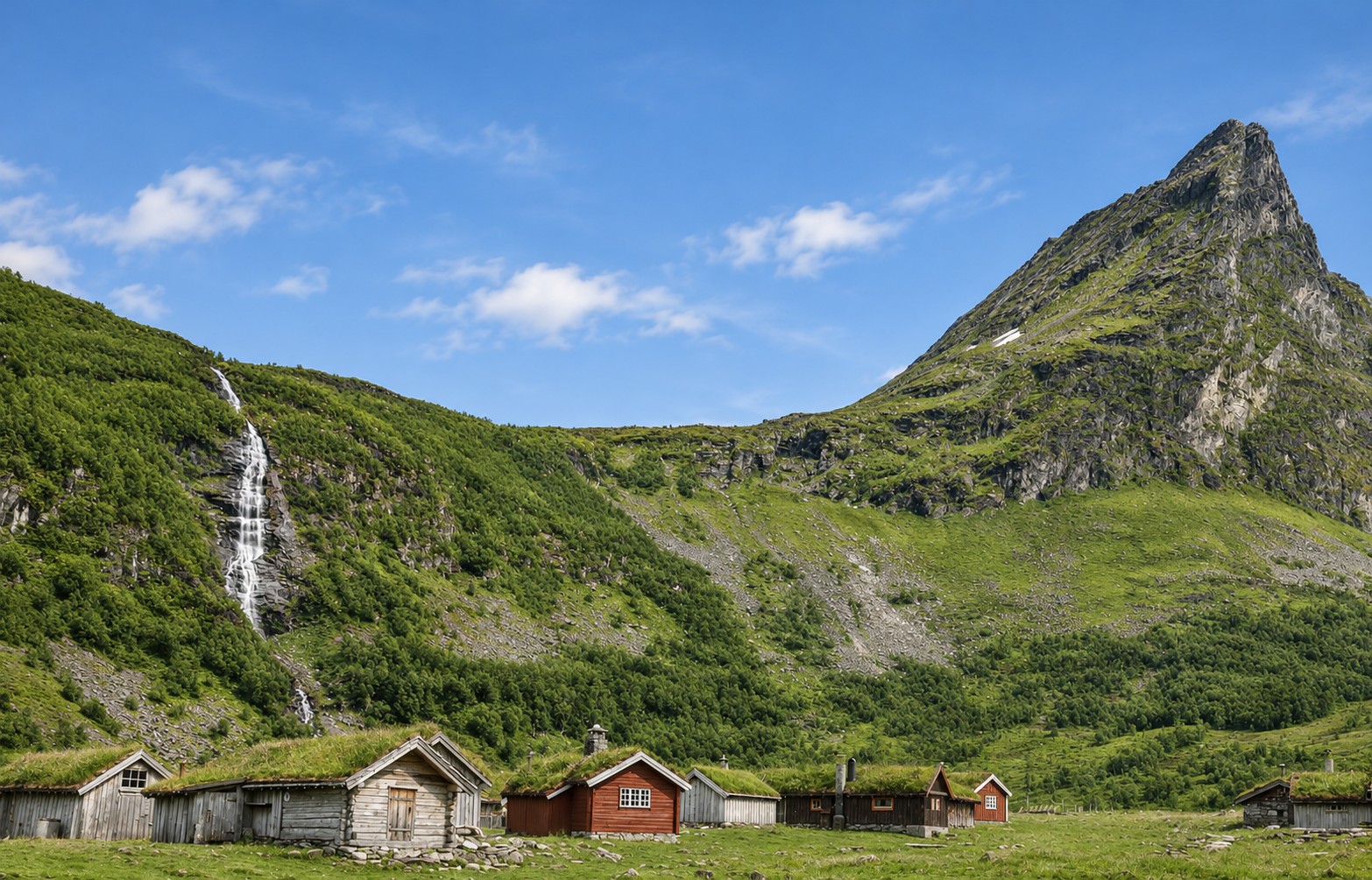
Old summer-farm buildings stand among green pastures and tall mountains. In summer you meet cows, sheep and fjord horses, and can taste goat cheese and goat-milk caramel made the old-fashioned way.
Practical: This is a summer destination. Check road and farm opening, tolls and guided visits before you go.The road closes in winter.
Drive from Geiranger via Eidsdal to Norddal, then take the toll road up to Herdalssætra.
Old summer-farm buildings stand among green pastures and tall mountains. In summer you meet cows, sheep and fjord horses, and can taste goat cheese and goat-milk caramel made the old-fashioned way.
Practical information: This is a summer destination. Check road and farm opening, tolls and guided visits before you go.
The road closes in winter. Check road conditions before your trip.
Drive via Eidsdal, take the ferry to Linge and continue through Valldal to Trollstigen.
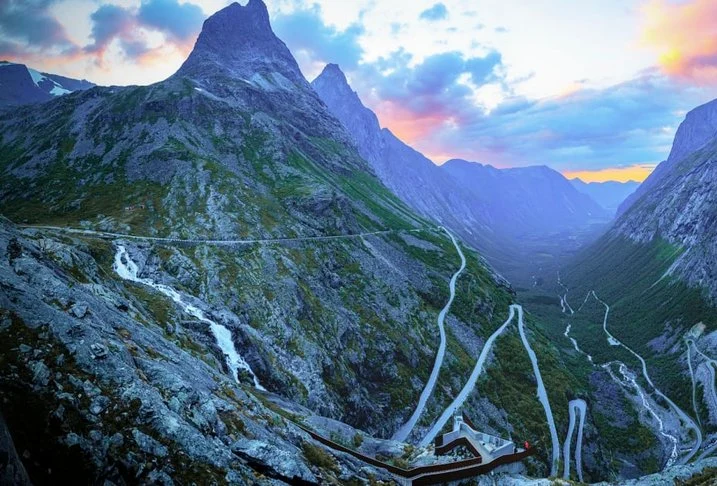
The Trollstigen plateau lies 852 metres above sea level, at the top of the Trollstigen road. Two viewing platforms in steel and glass reach out over the edge, directly above Stigfossen and the hairpin bends.
Practical: Allow extra time for the ferry, queues and stops. There is a café and a souvenir shop on the plateau. Check road status before travelling.The road closes in winter.
Drive via Eidsdal, take the ferry to Linge and continue through Valldal to Trollstigen.
The Trollstigen plateau lies 852 metres above sea level, at the top of the Trollstigen road. Two viewing platforms in steel and glass reach out over the edge, directly above Stigfossen and the hairpin bends. Allow time for stops along the way and for the view from the top.
Allow extra time for the ferry, queues and stops. There is a café and a souvenir shop on the plateau. Check road status before travelling.
The road closes in winter. Check road conditions before your trip.
Travel via Eidsdal, the ferry to Linge and onwards to Ålesund. Allow a full day for this trip towards the coast.
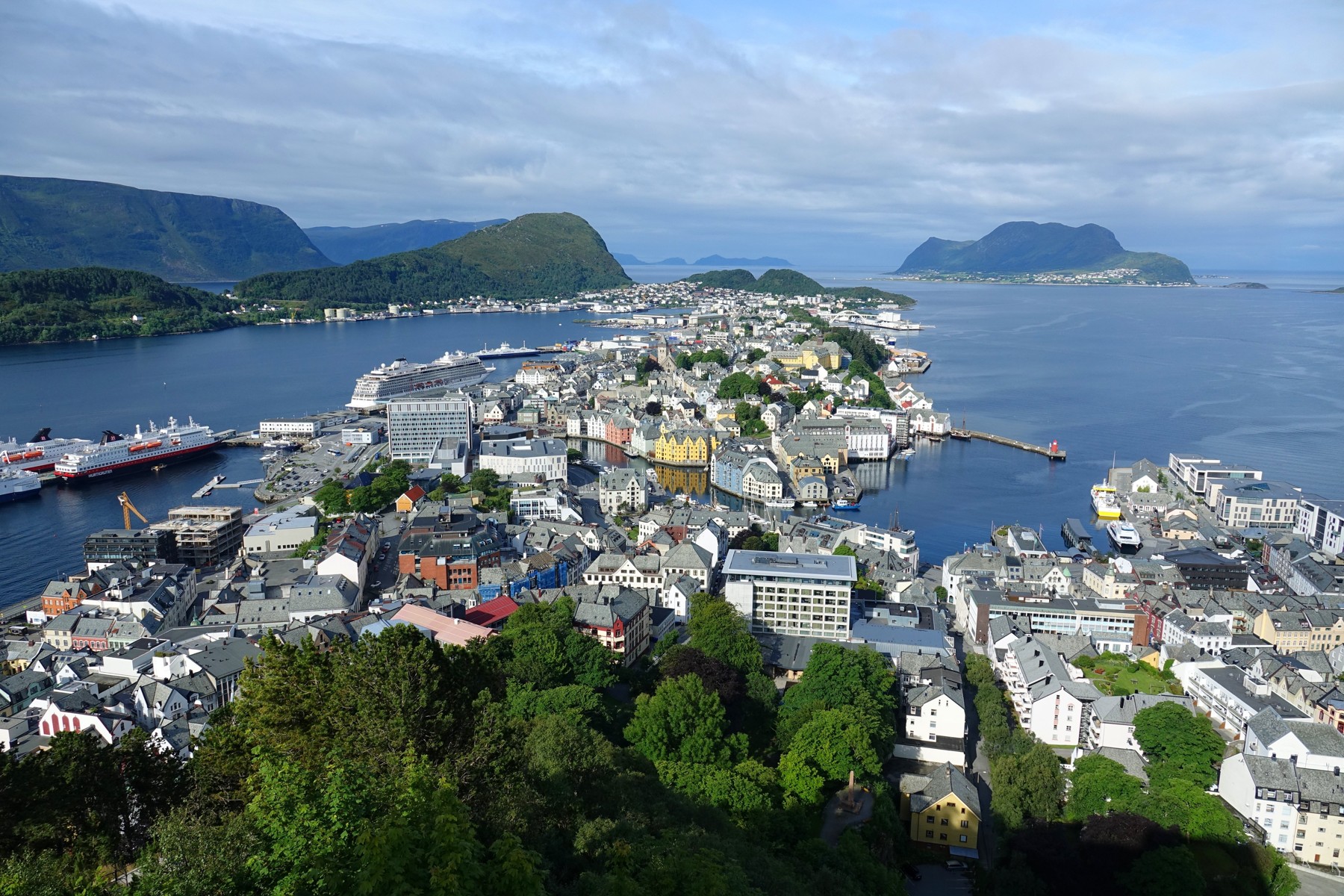
Ålesund spans islands between fjord and open sea. Rebuilt in Art Nouveau style after the 1904 fire, its centre is known for turrets, spires and decorated façades. Walk along the harbour, stop for a meal and enjoy the city, islands and sea from Aksla.
Practical: Plan ferry departures in both directions and allow time for stops.
Travel via Eidsdal, the ferry to Linge and onwards to Ålesund. Allow a full day for this trip towards the coast.
Ålesund spans islands between fjord and open sea. Rebuilt in Art Nouveau style after the 1904 fire, its centre is known for turrets, spires and decorated façades. Walk along the harbour, stop for a meal and enjoy the city, islands and sea from Aksla.
Practical information: Plan ferry departures in both directions and allow time for stops.
Westerås is one of Geiranger’s oldest farms and is still run by the family.
When avalanche danger ended winter residence here, the old barn found new life as a restaurant.
Enjoy traditional food with lovely views down to the village and fjord – a rewarding end to your walk.
Practical: The restaurant opens from May to September. Check current opening hours before visiting. There are few parking spaces, and parking is paid. Motorhomes and caravans cannot drive up. Feel free to walk from the campsite.
Westerås is one of Geiranger’s oldest farms and is still run by the family.
When avalanche danger ended winter residence here, the old barn found new life as a restaurant.
Enjoy traditional food with lovely views down to the village and fjord – a rewarding end to your walk.
Practical information: The restaurant opens from May to September. Check current opening hours before visiting.
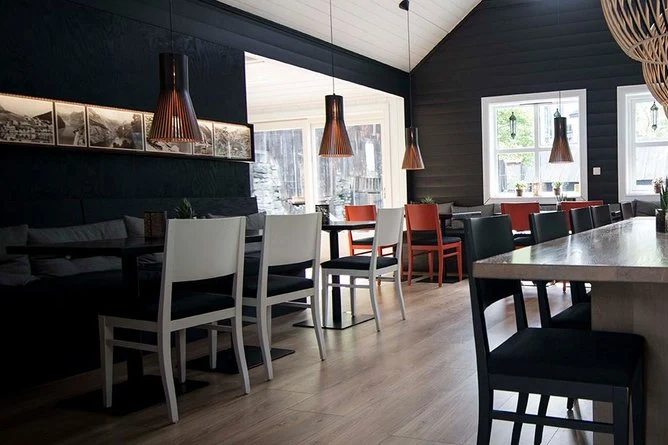
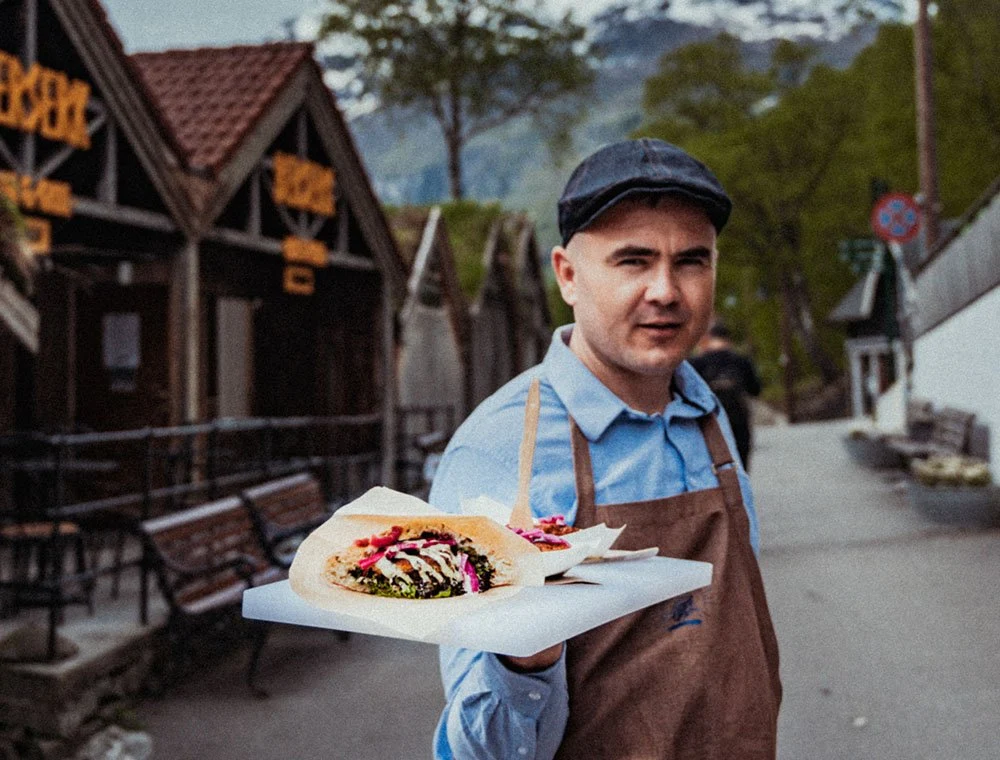
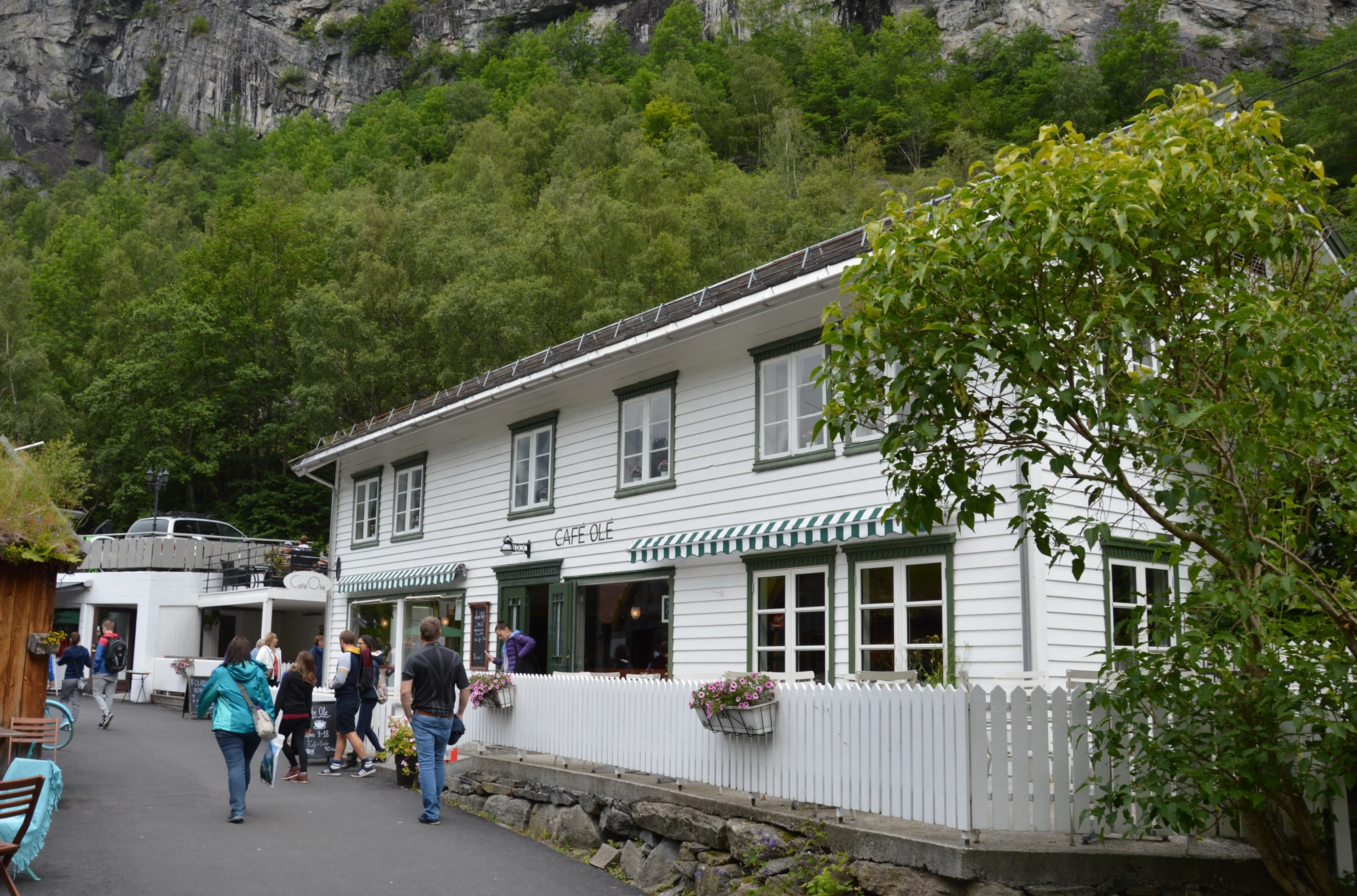
Café Olé and Olebuda stand in the middle of the pedestrian street, in a 19th-century wooden house.
Café Olé: Coffee, pastries and light dishes, plus a small shop with homemade products and goods from the local area.
Olebuda: Restaurant and outdoor seating, a nice spot for a meal between the experiences.
Practical: Café Olé is open all year, Olebuda only in summer. Check opening hours and book a table in high season.
Café Olé and Olebuda occupy a 19th-century timber house in the pedestrian street. Once home to Geiranger’s first general store and steamship office, it was part of village trade around 1880 and continued as a summer grocery shop well into the 1990s.
Today Café Olé serves coffee, sweet baking and light meals. Olebuda opens in summer with a restaurant and outdoor seating, ideal for a meal between your activities.
Café Olé also has a small shop selling homemade products and goods from the local area.
Practical information: Café Olé operates year-round; Olebuda is a summer venue. Check current opening hours and consider reserving a table in high season.
Coffee and bar, entrance from the pedestrian street
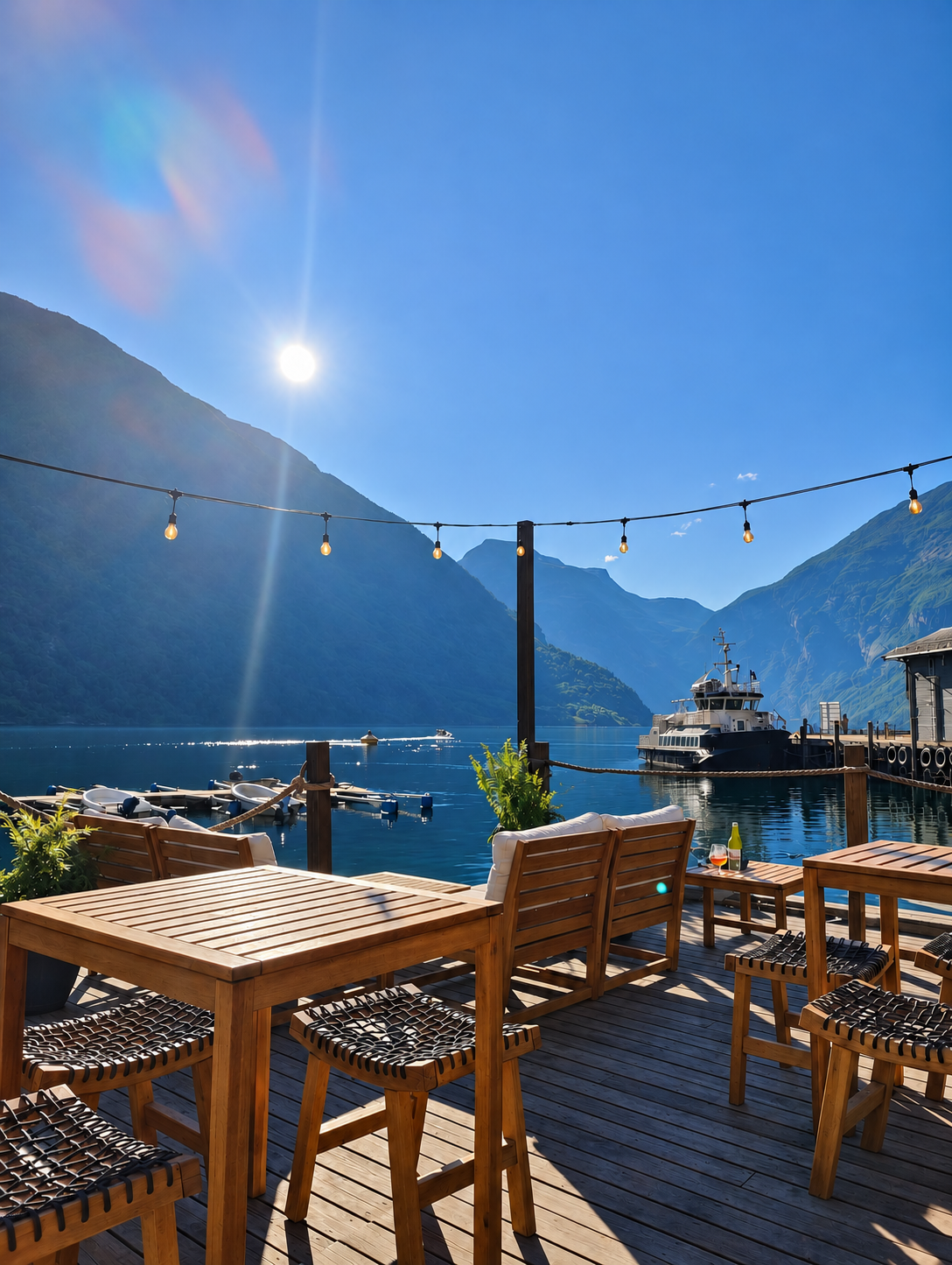
Tables by the water’s edge.
Geiranger Brygge is in the historic Notanaustet boathouse, right down by the fjord.
By day it is calm and relaxed, with coffee and local drinks, a little apart from the bustle around. Some evenings there is a DJ and a livelier atmosphere.
Practical: There is no fixed programme, but information about events is posted on Geiranger Brygge’s Facebook page. The link is below.
Geiranger Brygge is in the historic Notanaustet boathouse, right down by the fjord. Sit close to the water’s edge and look out towards the mountainsides and the boats coming and going.
By day it is calm and relaxed, with coffee and local drinks, a little apart from the bustle around. Some evenings there is a DJ and a livelier atmosphere.
Practical information: There is no fixed programme, but information about events is posted on Geiranger Brygge’s Facebook page. The link is below.
Geiranger Galleri occupies a former school building, where the classrooms have found new life as a place for art and encounters with artist Ola Liland.
With a twinkle in his eye, Ola calls the gallery a “troll-free zone”: here, art takes centre stage.
His colourful paintings and prints offer a fresh view of Geiranger and the surrounding fjord landscape.
Practical: Visit the gallery on your own, or join a guided tour – see the link below.
Geiranger Galleri occupies a former school building, where the classrooms have found new life as a place for art and encounters with artist Ola Liland.
With a twinkle in his eye, Ola calls the gallery a “troll-free zone”: here, art takes centre stage.
His colourful paintings and prints offer a fresh view of Geiranger and the surrounding fjord landscape.
You may recognise a place from your travels.
Practical information: Visit the gallery on your own, or join a guided tour – see the link below.
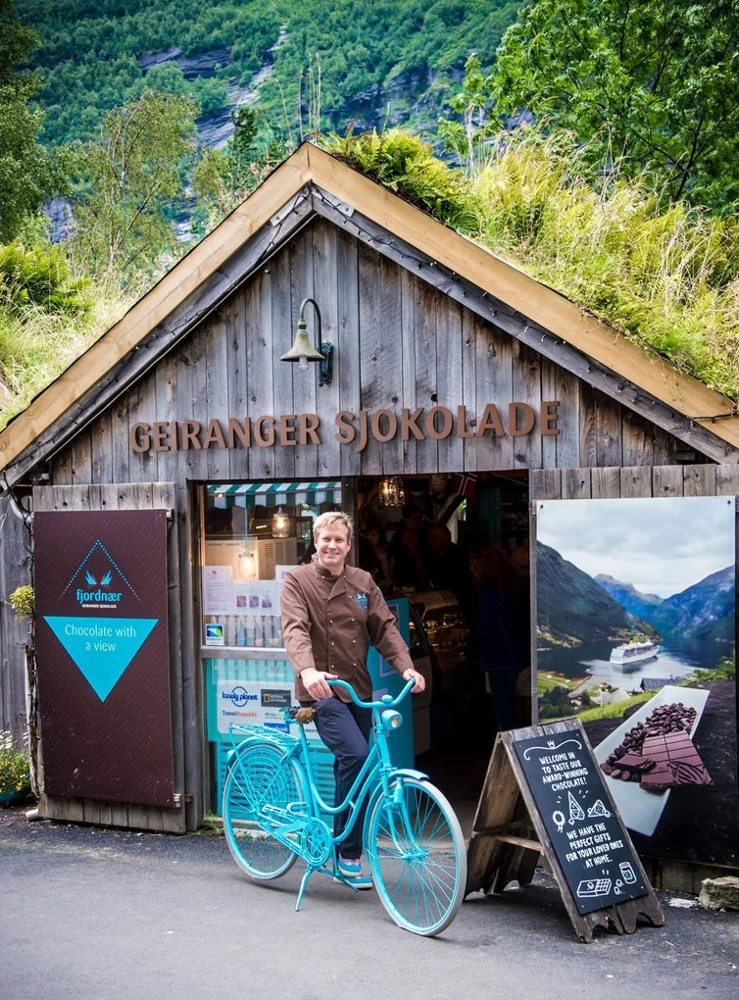
Geiranger Sjokolade occupies the old Holenaustet boathouse on the pedestrian street, with a shop and café at street level and chocolate production downstairs. Look for the turquoise bicycle outside.
The chocolate uses local ingredients and inspiration from fjords and mountains.
Choose a sweet gift or enjoy a café break in the little boathouse.
Practical: The shop and café normally open during the May–October tourist season. Check current hours before visiting.
Geiranger Sjokolade occupies the old Holenaustet boathouse on the pedestrian street, with a shop and café at street level and chocolate production downstairs. Look for the turquoise bicycle outside.
The chocolate uses local ingredients and inspiration from fjords and mountains.
Choose a sweet gift or enjoy a café break in the little boathouse.
The shop and café normally open during the May–October tourist season. Check current hours before visiting.
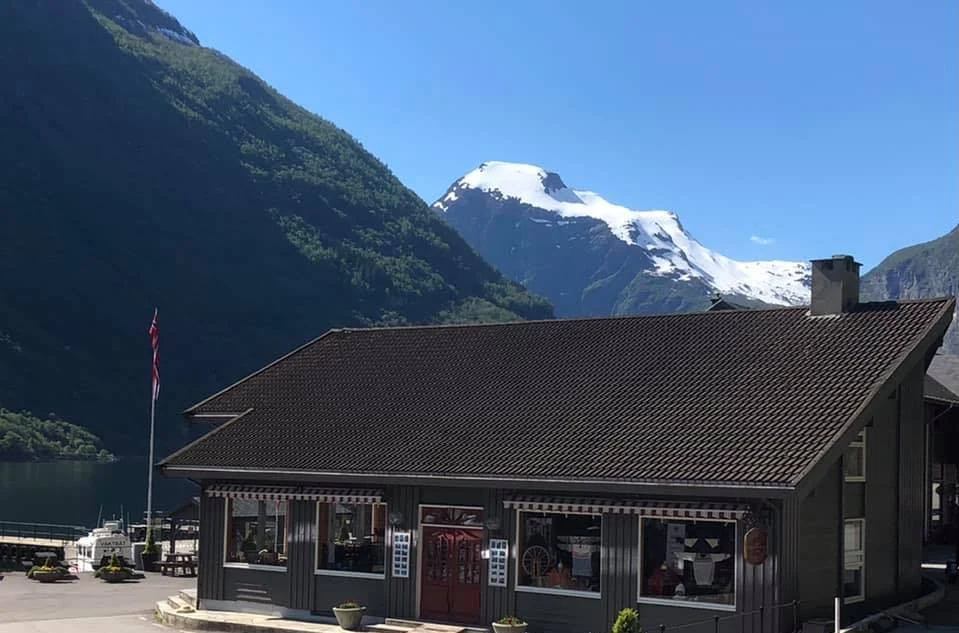
Clothing, interiors and crafts on the pedestrian street
Something distinctive to take home.
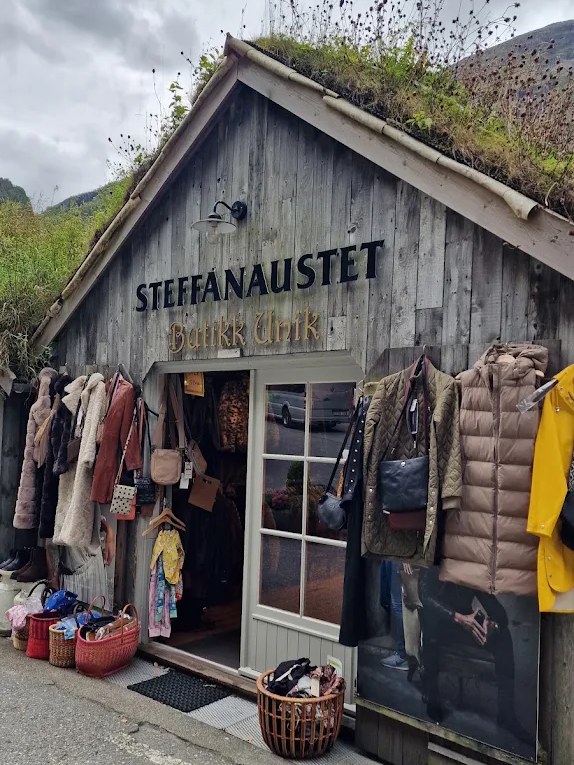
Unik is a charming little shop in the old Steffånaustet, a timber building with a turf roof. Here you will find authentic Norwegian clothing, leather goods and accessories.
A nice place to step inside and discover something special, with products that reflect local culture and tradition.
Unik is a charming little shop in the old Steffånaustet, a timber building with a turf roof. Here you will find authentic Norwegian clothing, leather goods and accessories.
A nice place to step inside and discover something special, with products that reflect local culture and tradition.
Fjordbuda stands on the main road through central Geiranger. It offers sportswear, outdoor clothing, equipment and souvenirs, as well as petrol and gas bottle exchange.
There is also a takeaway at the end of the building towards the ferry quay.
Practical: Open for much of the year, with hours varying by season.
Fjordbuda stands on the main road through central Geiranger. It offers sportswear, outdoor clothing, equipment and souvenirs, as well as petrol and gas bottle exchange.
There is also a takeaway at the end of the building towards the ferry quay.
Open for much of the year, with hours varying by season.
Festivals and events bring extra life, even outside the main season. See the organisers’ dates and programmes.
Photo: Geiranger Lyskunstfestival
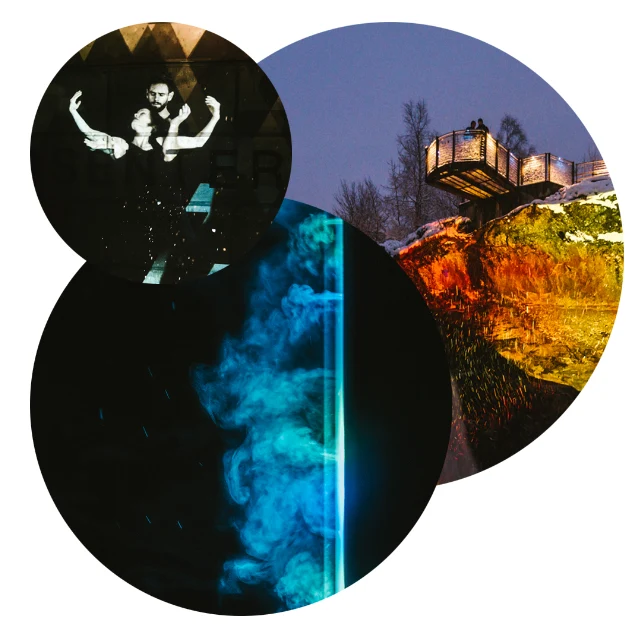
Geiranger Lyskunstfestival
Light in the winter darkness, January/February.
After Christmas, large light installations, video art and music bring new life to winter Geiranger. From the village centre to the surrounding mountainsides, light reveals the landscape in an atmospheric winter setting.
Practical: The festival takes place in winter, often around the school winter holiday. Dates, programme and installations vary each year; consult the organiser’s current information.
After Christmas, large light installations, video art and music bring new life to winter Geiranger. From the village centre to the surrounding mountainsides, light reveals the landscape in an atmospheric winter setting.
The festival takes place in winter, often around the school winter holiday. Dates, programme and installations vary each year; consult the organiser’s current information.
Concerts in the fjord landscape, September/October.
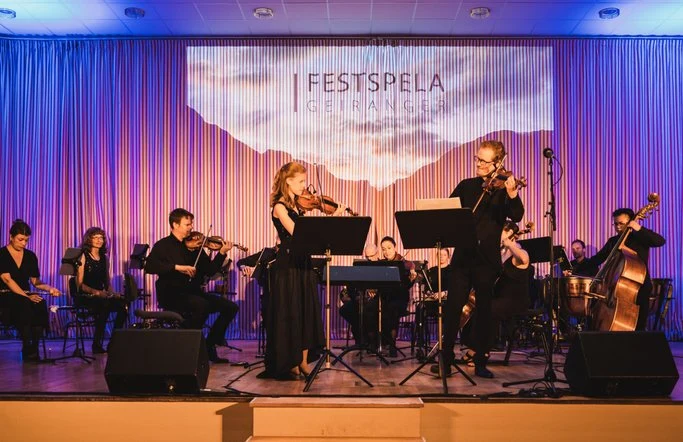
Festspela i Geiranger brings music into the fjord and mountain landscape.
With classical roots, it combines large concerts with intimate musical encounters.
Venues have included fjord boat trips and Dalsnibba, a gala concert in Hotel Union’s large hall, and smaller concerts in the church and at various places around the area.
Practical: The festival takes place in autumn. Venues, dates and programme vary; check this year’s programme and tickets with the organiser.
Festspela i Geiranger brings music into the fjord and mountain landscape.
With classical roots, it combines large concerts with intimate musical encounters.
Venues have included fjord boat trips and Dalsnibba, a gala concert in Hotel Union’s large hall, and smaller concerts in the church and at various places around the area.
The festival takes place in autumn. Venues, dates and programme vary; check this year’s programme and tickets with the organiser.